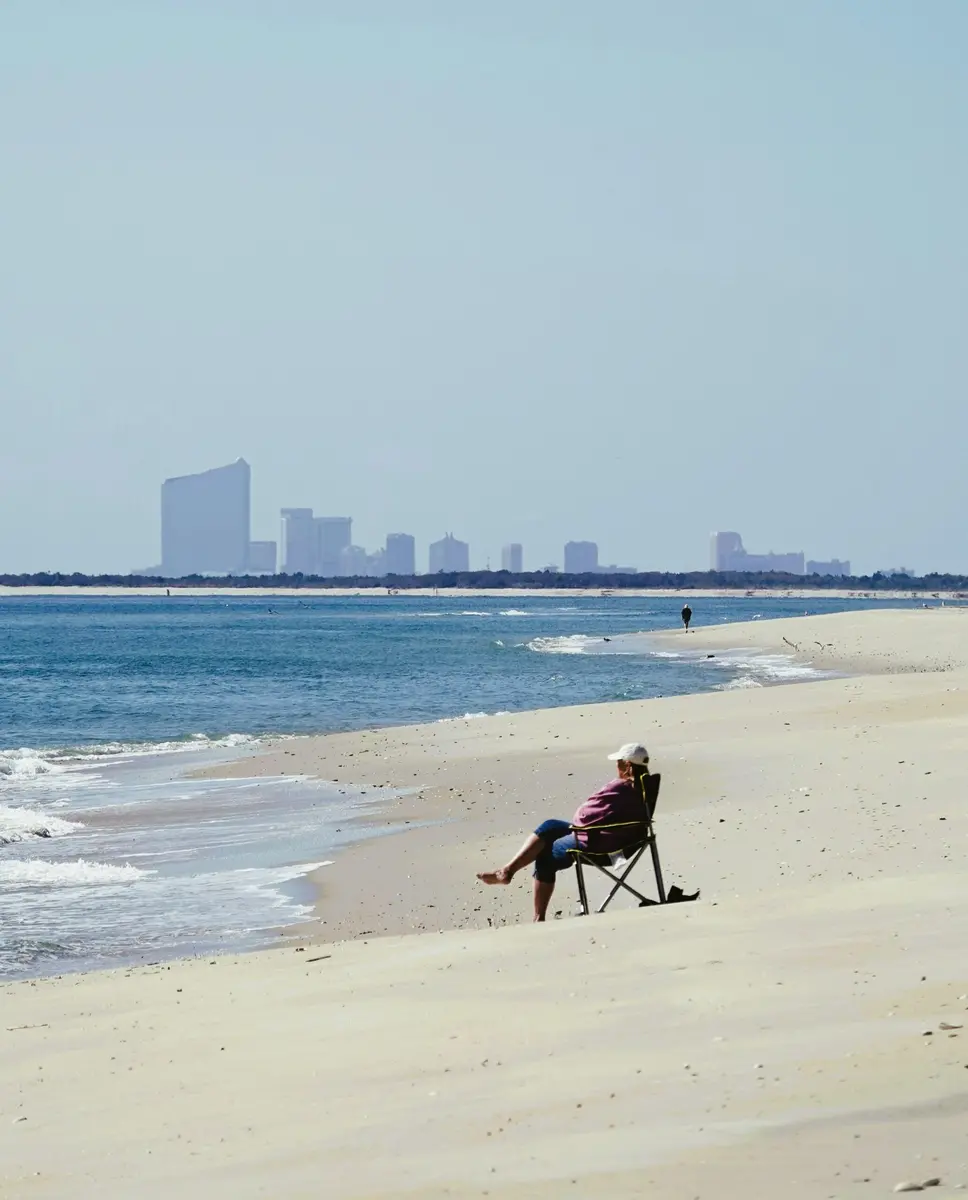
Uneventful can be notably eventful in its own right. After our raucous slew of storms and wind-whackings, the ongoing stint of smack-perfect skies shines doubly bright – literally.
Recently, a few midday sunshine showings have reached the uppermost brightness ratings on my handheld lux meter, a device used to determine the sun’s illumination.
Lux meters measure the solar luminous flux striking the surface of a square-meter unit, i.e. how dang bright it is out there.
Typically, summers shine when it comes to upper-end lux, with the sun being directly overhead. However, seasonal haze and ocean mists cut down on readings. Not so during bright autumnal stretches.
Although the fall sun sits at a lower angle in the sky, the often acrylic-clear Canadian air that moves in can foster intense direct solar radiation, easily reaching 100,000 lux at midday. That’s as bright as it sounds.
Using the better-known Global Solar UV Index scale, we’ve been seeing UV10s, bordering on UV 11s, an actual real measurement.
The UV Index previously used a scale of 0 to 10+. Then the world got hotter and brighter, forcing an upper-end increase to an “extreme” UV 11+.
POLAR VORTEX AKILTER: Speaking of Canadian air, some weird (possibly El Niño-ish) things are befalling North America’s jet stream systems, most notably the upper-air masses common to polar vortexes, the architect of our winters.
Simply put, the polar vortex is showing signs of going wonky, to the point that forecasters anticipate what they’re calling “a split.”
One meteorological report offers, “Major weather models are tracking a potential historic weakening or disruption of the polar vortex … though a full split or Sudden Stratospheric Warming (SSW) cannot yet be confirmed.”
DC’s capitalweather.com is headlining “Unprecedented polar vortex disruption throws wild card into winter outlook.”
It then writes, “Models predict an extraordinary weakening of the polar vortex in early November, but experts disagree on whether it will mean more cold and snow in the eastern United States.”
The publication uses the safe “experts disagree” disclaimer, as I often do. At this point, there’s no correctly predicting storms, droughts, deep freezes or freaky warm spells.
I’ll noncommittally guarantee mild temperatures for the Jersey Shore, as has happened during sub-super El Niños of the past. Many fell within the category of Sudden Stratospheric Warming Events.
Might El Niño and a schizo polar vortex combine to give us double-barrel warmth?
Now to placate the snowplow folks, who want winter whiteness out the wazoo. While I was running long-term (jet stream) forecast models, a possibility arose whereby a quick burst of typical winter coldness might coincide with a super Niño-ized storm.
The tweaked computer models offer the potential for an unparalleled all-time super blizzard. Keep in mind that is a long shot. Also, any such beast would likely be mainly a mainland mauler. Far more likely: short sleeves in January.
As to now-here November, virtually all professional long-term forecasts point to this fine weather hanging around for a long low-precip stretch, with a high chance of unseasonable warmth.
Winds will be light to moderate and coming from all quadrants for at least the next 14 days.
For anglers and beachgoers, a fall invite to visit LBI is written across the skies. Speaking of which …
While heading home Monday night after a nighttime plugging session, I once again saw the brightly lit drone that has been routinely plying LBI skies, seemingly in an established pattern.
This single aircraft showing is nothing like the Great Drone Mystery of our recent past. It’s far from secretive, with its multicolored lights and prop noise easily detected from the ground.
I’ve gotten some social media feedback that the unmanned aircraft is mapping the Island. Hopefully it’s Amazon since I’ve already signed up for drone deliveries to my backyard.
GOING ROPELESS FOR WHALES: Many commercial fishing groups, along with a large contingency of marine mammal conservationists, are awaiting the results of a National Marine Fisheries Service fact-finding mission.
A short time back, NMFS sent out communiqués requesting “information from fishery participants and others with specialized knowledge on the potential use of ropeless fishing gear, which includes on-demand fishing gear and other fixed gear that does not use persistent buoy lines.”
The gathered information will determine potential future use, development and management of these on-demand systems by fisheries in the Greater Atlantic Region.
The method is endorsed by many/most conservation groups, which see it as an ingenious way to greatly reduce right whale entanglement woes.
On-demand (aka ropeless, pop-up) gear is now being tested in Canada and the U.S., moving commercial fishing even farther into the automated AI age. The industry is already alive with scientific advancements.
Traditional rope-tethered pot and trap gear, used in lobster and crab fisheries, has been implicated in many marine mammal entanglements, such entanglements being one of the leading causes of marine mammal and sea turtle deaths. Removing the dangling ropes, often hanging surface-to-bottom for days, would best protect right whales.
HOW IT WORKS: With ropeless fishing, a captain travels to favored fishing grounds and drops off pots and traps as usual. However, the gear is accompanied by a compact box containing a spool of rope, acoustic equipment, highly buoyant buoys or an inflatable lift bag. The box falls to the ocean floor, resting alongside the traps. The box is thought to have minimal impact on targeted species.
During the drops, the captain uses water-surface GPS coordinates to mark each drop point, after which the gear is left to soak for an allotted catching period.
When time comes to harvest the catch, the captain heads to GPS waypoints, fully relying on “virtual gear marks” since no surface buoys are used.
Upon reaching the fishing area, the captain uses a smartphone to activate on-board hardware that then interfaces with the remote acoustic equipment lying on the bottom.
With the press of a smartphone button, the contents of the box are released, essentially jettisoned, floating to the surface. Buoys and lines attached to traps and pots are retrieved by the fishermen for clearing.
During a Responsible Seafood Summit in Canada, snow crab fisherman Martin Noel reported, “I would never imagine that I would use a smartphone for fishing. There’s a buoy at the bottom of the ocean just waiting for me to press the button, and then a minute after it pops up, I start fishing.”
He added, “In the East Coast area where whales are present, you can fish crab while being safe for right whales.”
Obviously, the technique is not truly ropeless. This adds a complication. What if suddenly rising buoy ropes occur just as whales are passing over?
Proponents of the on-demand technique say the dangers of this happening are slight, especially when compared to the threats from ropes hanging down for days on end. Also, new ocean monitoring methods can ensure captains there are no marine mammals in an area being fished.
A tougher problem is the method’s lack of visible buoys/markers on the sea surface. Gear conflicts are possible, as competing fishermen might unknowingly drop their gear onto another captain’s submerged gear.
Canadian Wildlife Federation Fisheries Engagement Specialist Elizabeth Vezina recognizes the bumps in the water.
“We set out to develop a trial framework to determine how we could have an evidence-driven approach to testing the suitability of these devices for fisheries, so we sat down with our fishing partners throughout the Maritimes and started to talk to them about what concerns they had with this gear, and of course, there were many.”
There’s expected hesitancy from within the commercial fishing community, opponents claiming “Ropeless is hopeless.”
A large part of that hopelessness is the costliness.
On the surface, a switch from traditional to high-tech remote gear sounds like a winning proposition, unless you are a commercial fishermen tasked with buying ruinously expensive new gear, or making pricey adaptations to existing gear.
Keep in mind that many commercial fishing businesses are often in roiled fiscal waters. The initial outlay for on-demand fishing would be taxing, but even those adopting the method aren’t guaranteed that catches will be on par with the success of former gear.
The NMFS findings, once released, could play heavily into the advancement – or panning – of the on-demand fishing off our coastline.
FLASH GHOSTS: It’s the time of year when Island beachgoers might catch a fleeting glimpse of mini ghosts zipping across the sand.
The speedy specters are world-class crustacean athletes known as ghost crabs. They are the fastest-known terrestrial crabs in the world, able to move at 10 mph. For their diminutive size, that’s blistering. Nearby fiddler crabs often cheer them on – the sound of one claw clapping.
Complementing a ghost crab’s mysterious sand-top aura is a beige-colored carapace, offering a camouflage that perfectly matches the sand itself.
Though outwardly terrestrial, these are marine creatures, breathing through highly modified gills that require constant moistening.
While their aura-like appearance gained the crabs the “ghost” moniker, the species’ Latin label, Ocypode quadrata, means “swift-footed.”
Along with speed, the ghost crab is alert in a panoramic way, with compound eyes mounted on long stalks, offering acute 360-degree vision. There’s no sneaking up on one, even for a friendly photo shoot.
When grabbing a quick pic, I plop down on the sand and wait (and wait) for one to emerge from an easily spotted burrow opening.
Ghost crab burrows are most often dug on the upper beach, including dune lines.
The tunnels are masterfully and tirelessly built, as the crabs painstakingly roll sand balls upward and outward, to place on the beach surface. Sand tailings and a perfectly round tunnel indicate a crab down below – often far below.
Burrows can extend as much as 4 feet down, far enough to reach the saline water table. That depth discourages predators, like raccoons, foxes, otters and certain shorebirds, while also thwarting fierce summer scalds, when surface sands can exceed 130 degrees.
In winter, the crabs cozy into a burrow’s dampest layer, becoming dormant.
Though offering a rather amicable laid-back look when casually eating algae and vegetative debris, they can become terrestrial menaces when fiercely feeding upon sand crabs and tiny beach amphipods. Even more menacing, ghost crabs will gang up and devour diamondback terrapin hatchlings. Now, that’s spooky.
RUNDOWN: Tog fishing is drawing a decent daily crowd to the South Jetty, as subdued wave action has also attracted a decent showing of beachline surfcasters, though far from the days of fighting for a jetty.
Tog weigh-ins are completely dominating the LBI Surf Fishing Classic’s leader board. They’re being taken on either sand crabs or green crabs, mainly off the South Jetty.
A single striped bass squeaked into the Classic last week, taken in Surf City on bunker. Beachfront anglers have nabbed a few shorts and an occasional keeper.
To date, the stripers have been spookily scant. I’ll follow the upbeat trail by suggesting we’ll be seeing a late-arriving bass biomass, meaning the bite will extend well into December. Get those needlefish plugs ready.
Next week, I’ll do a segment on freezing whole bass for the holidays.
Holgate beachfront and most of LBI remain easily drivable to mobile anglers. Please give plenty of leeway to beachgoers – and a million or so dogs. Those users will be plentiful with this nicer weather.
Mariner Note: The Army Corp’s prized dredge Murden has been working Barnegat Inlet, as state dredgers simultaneously work the bay.
The inlet had been in dire need of dredging.
The main channel is on the inlet’s north side, able to accommodate deeper-draft commercial fishing and USCG vessels.
Here’s thanks to the Army Corps for its service.