What does it mean to belong to Long Beach Island? Do you have to have been born here? If you just summer in a cottage you own, can you consider yourself officially a part of the community? Is there a certain number of years to accrue before you can be an “official” Islander? These are questions I think everyone has feelings about, and I was given fresh reason to ask myself.
Recently, someone from Barnegat Light whose family has been here about as long as mine asked me just who I thought I was talking about Barnegat Light?! This person decided that there are certain criteria that need to be met to voice an opinion. Unless and until I meet those criteria, the message was I should stop talking about the town since I am an outsider in their eyes.
If I cannot show that I have bought property in Barnegat Light, for example, then I have no room to talk. Inheriting a property doesn’t count, I was told. Similarly, if I don’t live in town during the dead of winter, that’s another strike against me and all those who snowbird, apparently.
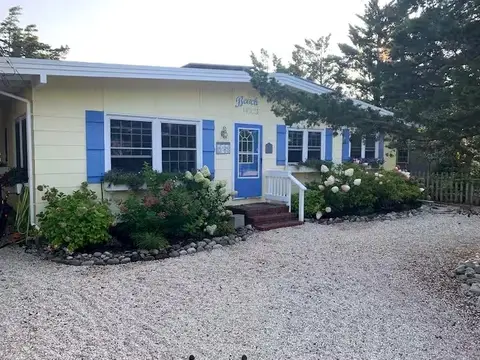
Be that as it may, my Island roots go back a ways. But even if they didn’t, the measure of one’s right to free speech isn’t tied to ancestry, property or recency. To their checklist, I did not buy my way into town, at least not directly. My grandparents and great-great aunt bought two tiny little sportsman’s cottages in desolate southern Barnegat Light in 1937.
We’ve held onto one of the two for 89 years and counting, with no substantive changes to its 1930s appearance besides upkeep. My generation is taking over its care as the next in line, handling the upkeep with our own hands and sweat, and paying the bills and taxes. It will pass to my generation’s children when the time comes and, God willing, pass on down the line from there as long as it is standing and loved by my family.
As a 1925-built rustic cottage, it has no insulation and a fireplace that merely takes the edge off deep winter cold. So, aside from one desperate winter long ago for two members of my family who toughed it out and for the occasional unmarried fisherman from Independent Dock who my grandmother invited to use its beds when unoccupied, my cottage has been strictly an April to October home shared amongst the family and a few friends over all these years.
If we could stay through the winters without major renovations, we would. For me, I commute down often throughout the off-season for work, events and to see Island friends.
My family’s predictable and cherished summers at the beach are close to our hearts. For four generations, we think of that cottage and this town as our home. Though childhood homes became dorms, then apartments and first homes, though jobs changed, families started and children were born, the one constant for us all has been this unchanging home by the sea. No matter what happens elsewhere in life, we are lucky enough to be able to come home to Barnegat Light and all that we love.
Though there has been change over the last 80 years, many of our experiences and friendships have been shared across the generations. My mother and her brothers bought penny candy at Don Woods’ store. Their parents would have them walk over to the old post office/gas station/general store on 18th Street to get the mail. The Day family, Ginters, Byrnes and Mrs. Smith at the end of East 23rd, with her open kitchen window offering coffee to patrolling soldiers on horseback during World War II, would all come over for drinks in the evenings.
Starting in the 1970s, a designated family buyer would race over to Viking Village to catch Ed Heitman arriving with his station wagon full of his latest art. The Zion Lutheran Church rummage and bake sales were traditions for us. Favorite treats out included milkshakes at Kelly’s, burgers at Wida’s and foosball at Kubel’s.
I can still fondly remember sitting at the luncheonette in Andy’s that has so wonderfully come back to life now as a coffee shop. Fish from Independent Dock on the stove was a must. Fresh-caught fish from surf casting and crabs from the bay were a must, too. There was always an annual pilgrimage up to the lighthouse.
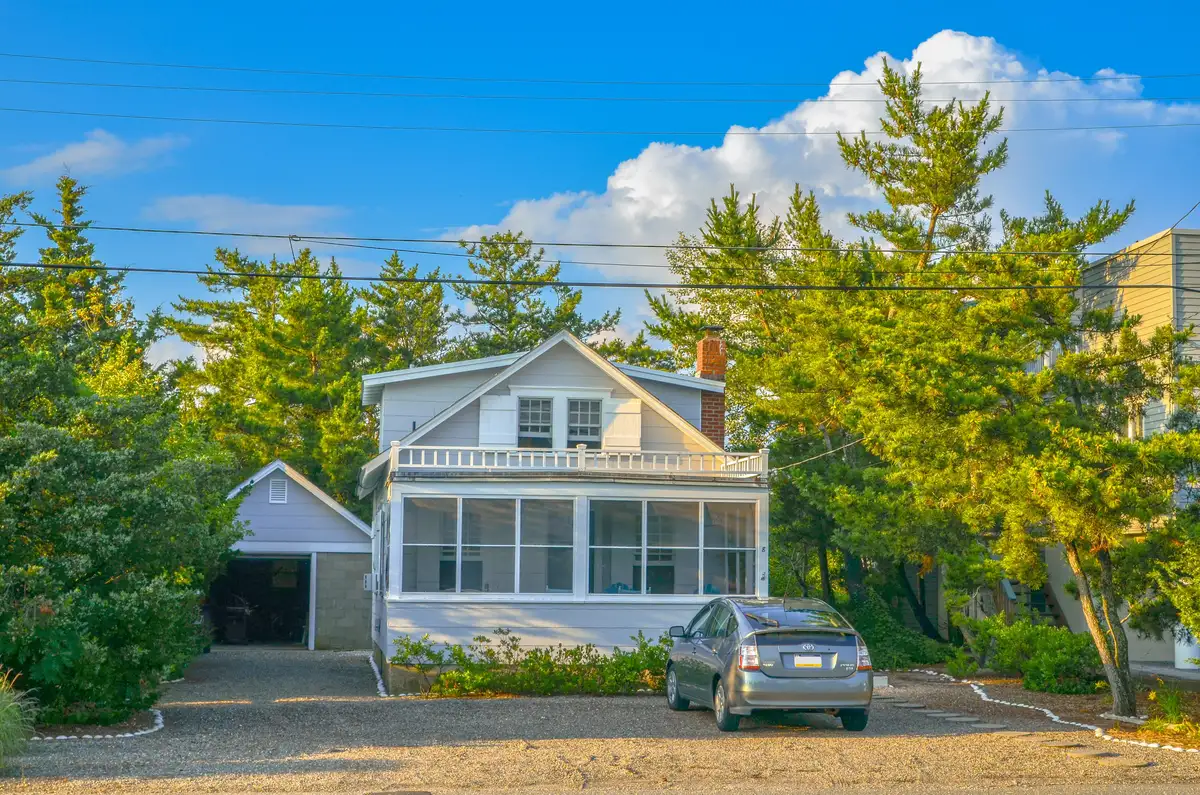
The Sharp family cottage in Barnegat Light looks much like it did 100 years ago.
When young, I’d go up to Andy’s once a week to see what new shark toys or Matchbox cars they got in and stare into the fish tank at the seahorses. Years later, I’d go up just the same to buy bait and tackle and shoot the breeze with Melvin Bjornberg.
Early visits to the Barnegat Light Museum led me to join that remarkable team over 10 years ago, where I am now honored to be their curator and, along the way, befriended extraordinary people like Anna Lisa Olsen Ray, Edith Parker, Marion Larson and Margaret Buchholz.
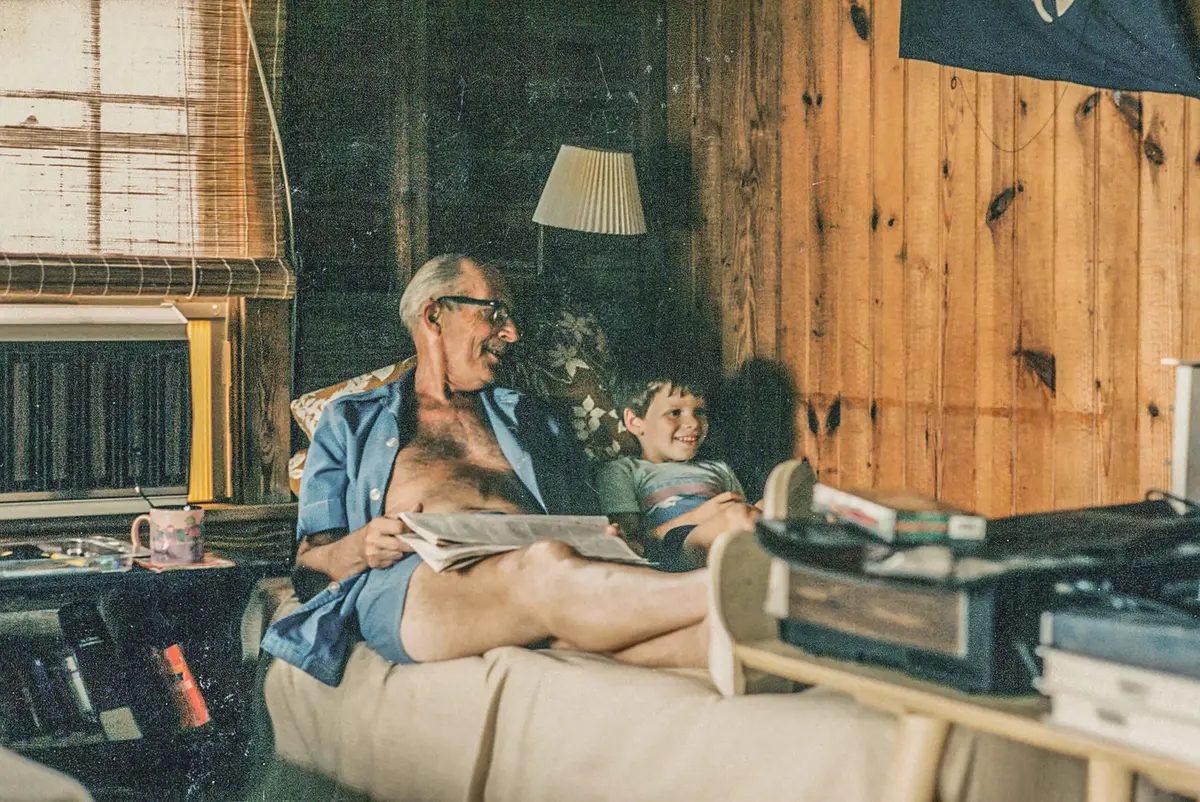
For years, my grandmother and I would get up early to go to the Inlet Deli to grab my grandfather’s newspapers and breakfast from Ron and Carol Spisso. When he came back to town in 2022 after years of long-distance phone calls from Oregon, Ron greeted me with the same old refrain I heard countless times over 30 years earlier. “Mr. (Jack) Platten … a New York Times, Trenton Times, Wall Street Journal and two jelly doughnuts.” Time stopped and moved backwards, as it so often does in Barnegat Light.
To be sure, if Dr. Dodd delivered you and you’ve called a cottage on the Island your home ever since, you’re an Islander through and through. And if you’re just day-tripping to Beach Haven with friends when you usually go to Seaside Heights with your family, then yes, you are a bona fide “shoobie.” But there are so many people between those two caricatures of who comes to our Island and leaves a part of their soul behind the rest of their lives.
The popularity and love of our Island are not just in how long you’ve been here or how long you’re staying. For every fishing family that arrived a century ago, there are Quaker families who arrived three centuries ago. For every summer resident who thinks the Island has changed for the worse these past 20 years, there are those who found the Island 10 years ago and think this place is heaven on earth. For every year-round resident who no one really knows, there are summer residents who volunteer at church events, whose children wait tables at local restaurants or serve as lifeguards, and who pay their taxes the same as the permanent residents do.
Are we to disqualify the 60-year resident with homegrown children who snowbirds in Florida after Christmas? I’ve known too many decent summer residents and snowbirds who love the Island deeply for the same reasons as everyone who was born, raised and never left to go along with dividing the Island community into legitimate and illegitimate statuses.
The only criterion that matters in deciding whether you can or cannot feel a part of this Island and entitled to your feelings and opinions is love. If you love this Island because of its incomparable beaches, its small towns, its beloved family restaurants, bars and businesses, and the friends you’ve made and the family memories you’ve shared here, if Long Beach Island holds a special place in your heart, then as far as I’m concerned you’re a part of what makes this place so magical and worth arguing about.
We can all grumble or scream or cry when a storied restaurant closes or another sweet old house gets torn down. We only do so because we love it here, and seeing our home as we knew it change is painful.
So I ask myself, why did someone try to diminish my love and sense of belonging to Barnegat Light, to greet me with suspicion and hostility though I just enjoyed my 41st summer here? Because that person knows this is an incredible place that’s home for them and they don’t want anyone to intrude upon it or harm it.
But let this summer resident and winter commuter plainly respond that no matter how anyone else feels about it, Barnegat Light is my home, too. Wherever I am, it always will be part of the bedrock of my heart and soul. On my cottage porch hangs terra cotta art my sister made a long time ago. It has a simple credo the family believes in: “The Rhythm of the Sea Speaks to Me … And My Heart Soars.”
Reilly Platten Sharp is curator of the Barnegat Light Historical Society and Museum.