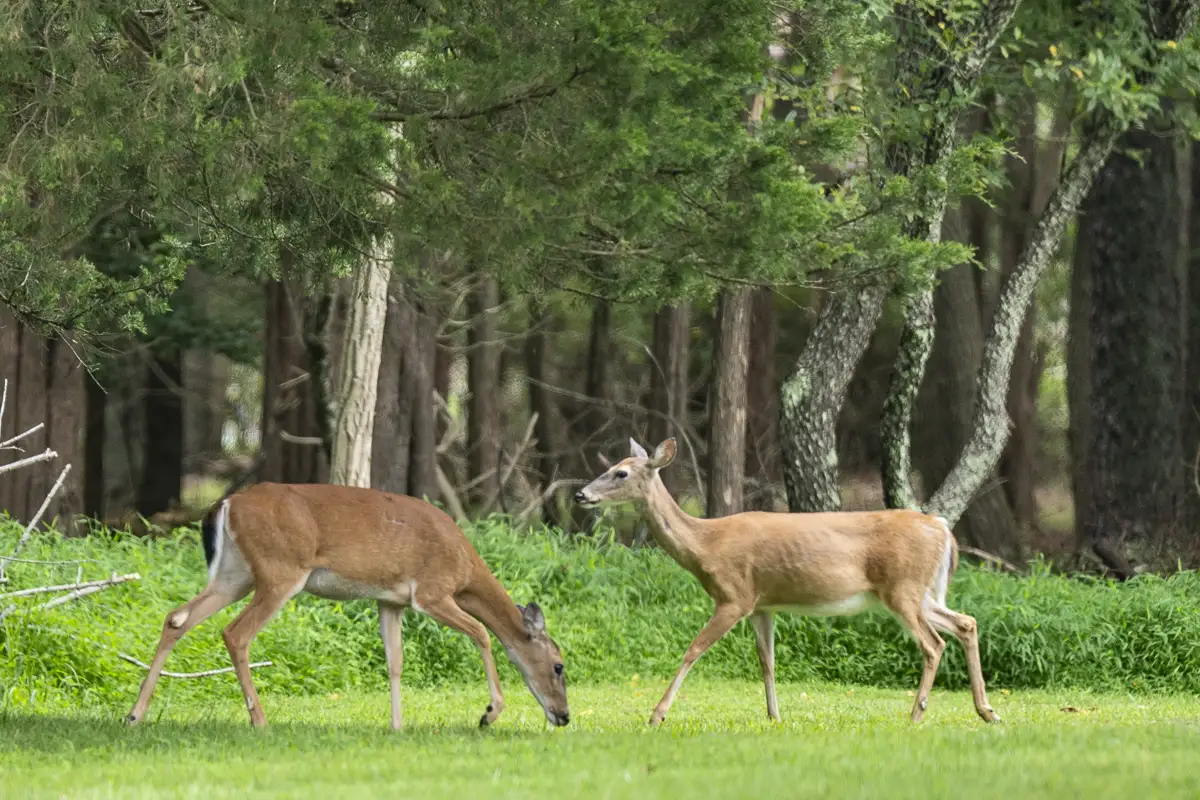
Motorists are reminded to drive with extra vigilance as white-tailed deer mating season gets underway, and darkness arrives earlier. Deer are more likely to run out onto roads during this time of year – known as the fall rut – as bucks pursue does, risking the possibility of collision with a vehicle. Increased deer activity is more likely to occur in the early morning and around sunset, when visibility may be more limited due to darkness or sun glare.
Peak mating season for deer in New Jersey runs from mid-October into mid-December in all areas of the state.
“Collisions with deer pose a very serious safety threat and can cause significant damage to vehicles and possible loss of life,” said Dave Golden, assistant commissioner for the
N.J. Department of Environmental Protection Division of Fish and Wildlife. “It’s especially important that drivers be extra vigilant to this threat and take time to know steps that can be taken to reduce the risk of collision.”
Exercising caution becomes even more important when Daylight Saving Time ends Nov. 1, causing commutes to align with periods when deer are most active and lighting conditions are more difficult for motorists.
The NJDEP offers the following tips to help those behind the wheel practice caution during the peak of the fall rut:
- When a deer is in the vicinity, slow down and watch for possible sudden movement. If the deer is in the road and doesn’t move, wait for the deer to pass and the road is clear. Do not try to drive around the deer.
- If there is one deer, assume that others may be in the area. Deer typically move in family groups during this time of year and cross roads single-file.
- Keep an eye out for “Deer Crossing” signs. Slow down when traveling through areas known to have a high concentration of deer so there is ample time to stop if necessary.
- If traveling after dark, use high beams when there is no oncoming traffic or vehicles ahead. High beams will be reflected by the eyes of deer on or near roads.
- Don’t tailgate. The driver ahead might have to stop suddenly to avoid hitting a deer.
- Always wear a seatbelt, as required by law. Drive at a safe and sensible speed, accounting for weather, available lighting, traffic, curves and other road conditions.
- If a collision appears inevitable, do not swerve to avoid impact. The deer may counter-maneuver suddenly. Brake appropriately and stay in your lane. Collisions are more likely to become fatal when a driver swerves to avoid a deer and instead collides with oncoming traffic or a fixed structure along the road.
- Obey the state’s hands-free device law or refrain from using cellular devices while driving.
- Report any deer-vehicle collisions to a local law enforcement agency immediately.
For more information about white-tailed deer in N.J., visit dep.nj.gov/njfw/wildlife/white-tailed-deer.