After more than 12 years as education outreach coordinator for the Ocean County Soil Conservation District, Becky Laboy is leaving New Jersey to put down roots in North Carolina.
“At OCSCD, I was very lucky to have a job that never really felt like work,” she remarked. “My job brought wonderful new opportunities to build partnerships, and friendships, and to learn about the vast connections between healthy soil, clean water, native plants, wildlife and the places we all call home – and help others discover them, too.”
When Laboy accepted her position in August 2014, the education and outreach program “was already grounded in a strong tradition of conservation education, established by Christine Raabe, now OCSCD’s district director,” she explained. “I was excited to help it grow in new directions by planting the seeds that would create a healthier environment for future generations.”
“Although Becky Laboy has been transplanted, her roots run deep in Ocean County – and all of New Jersey – where she helped to build and nurture a foundation of healthy soil and support a legacy of environmental stewardship,” said Raabe. “She surely set the bar high for the Ocean County Soil Conservation District and will be missed. Success will undoubtedly follow her on her new adventures.”
In her first few years with the district, Laboy became familiar with established programs such as the Barnegat Bay Environmental Educators Roundtable, a professional development program for teachers begun in 1997; the New Jersey Envirothon, a national high school environmental competition that tests students in knowledge and application of field experience, teamwork and problem-solving; the New Jersey Conservation Poster Contest, which offers students the opportunity to focus their creativity on natural resource topics and compete at local, state and national levels; and Jersey-Friendly Yards, developed by the Barnegat Bay Partnership through a grant from the N.J. Department of Environmental Protection, and featuring a comprehensive website to guide environmentally friendly landscaping throughout the state.
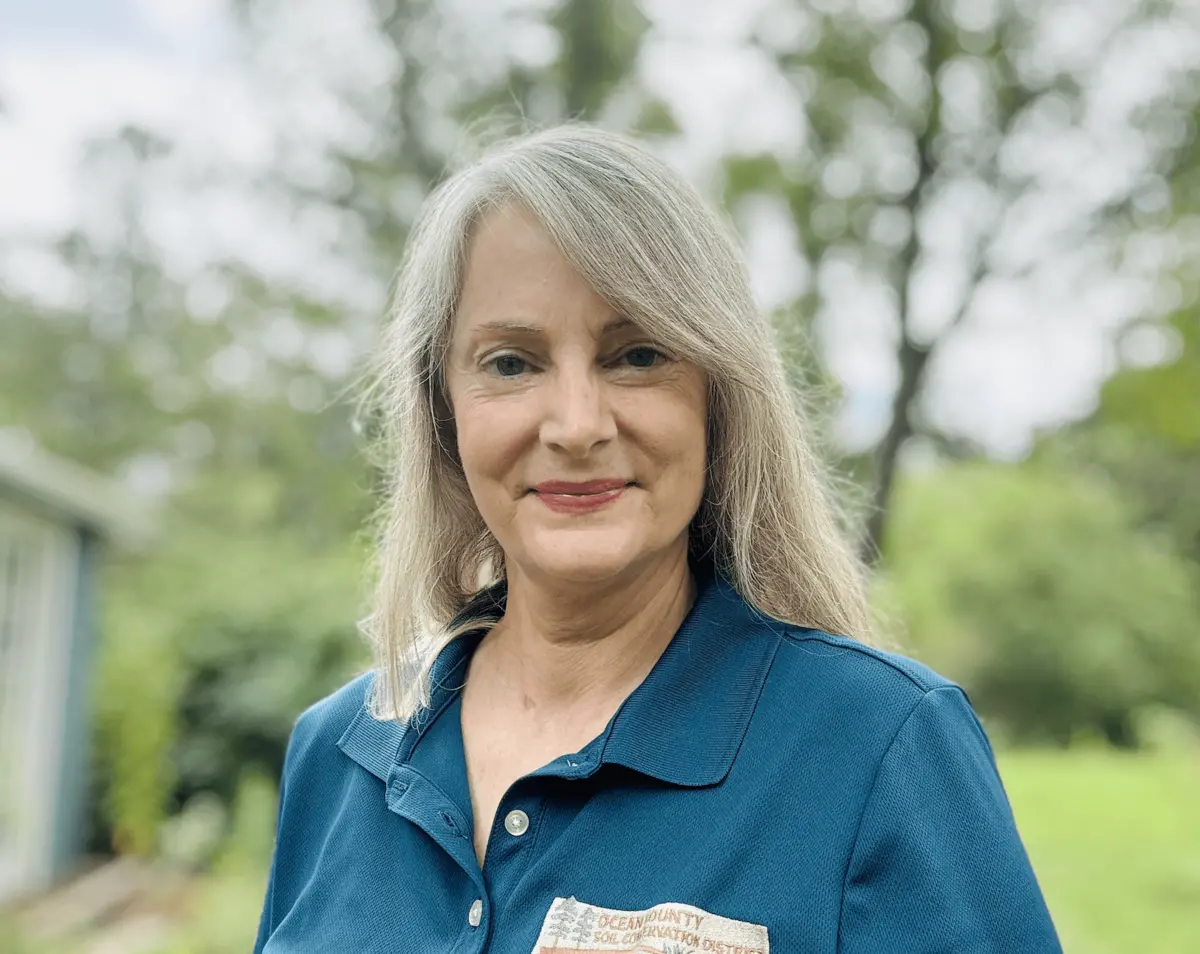
A NEW LANDSCAPE: Laboy is headed south to North Carolina.
“Perhaps no partnership program has shaped my career more than Jersey-Friendly Yards,” Laboy noted. “OCSCD has been a JFY partner since its inception in 2012. … What began as presentations about Jersey-Friendly landscaping, grew into conferences, workshops, school projects, demonstration gardens and partnerships.”
The first Jersey-Friendly Yards Conference, held at Ocean County College in 2017, brought together the Barnegat Bay Partnership, Rutgers Cooperative Extension of Ocean County, Brick Township Municipal Utilities Authority, Native Plant Society of New Jersey, Conserve Wildlife Foundation of New Jersey and renowned entomologist Doug Tallamy.
“These collaborations made it possible to move beyond simply telling people about Jersey-Friendly landscaping, to showing them what it could look like,” Laboy said. “They saw native plants supporting pollinators. They saw delightfully fancy caterpillars. They saw birds using habitat. They saw that a landscape could be beautiful without being resource-intensive. And, perhaps most importantly, they began to see their own yards as part of a much larger ecosystem.
“One of the most important aspects of a successful education and outreach program is making personal connections with the community – one of my favorite components of the job,” she said. “Soon I began presenting soil programs to students, garden clubs, environmental commissions, business leaders, master gardeners and college classes. The underlying message remained the same: Soil is at the root of all life on Earth. Soil is inextricably tied to healthy gardens, clean water, abundant wildlife and, ultimately, healthy communities.”
OCSCD’s education and outreach program continued to evolve. So did the ways Laboy could connect people with conservation. She created the district’s first newsletter and helped expand the website; the latter, she said, has become “an increasingly valuable educational resource filled with articles, lesson plans, classroom activities, self-guided tours and practical information for educators, homeowners, municipalities and conservation professionals.
Laboy also spent a lot of time outside.
“One of the things I enjoy most when teaching about soil is taking people outside to dig a mini soil pit and actually see, touch, smell and engage with the soil itself,” she explained. “Grant-funded projects that combine education with on-the-ground conservation were a key component of sustaining and supporting the education and outreach program. Whether helping restore stormwater basins with native vegetation, installing school vegetable gardens, creating classroom resources or connecting residents with practical stewardship tools, the goal has always been to empower people with knowledge they can put into action.”
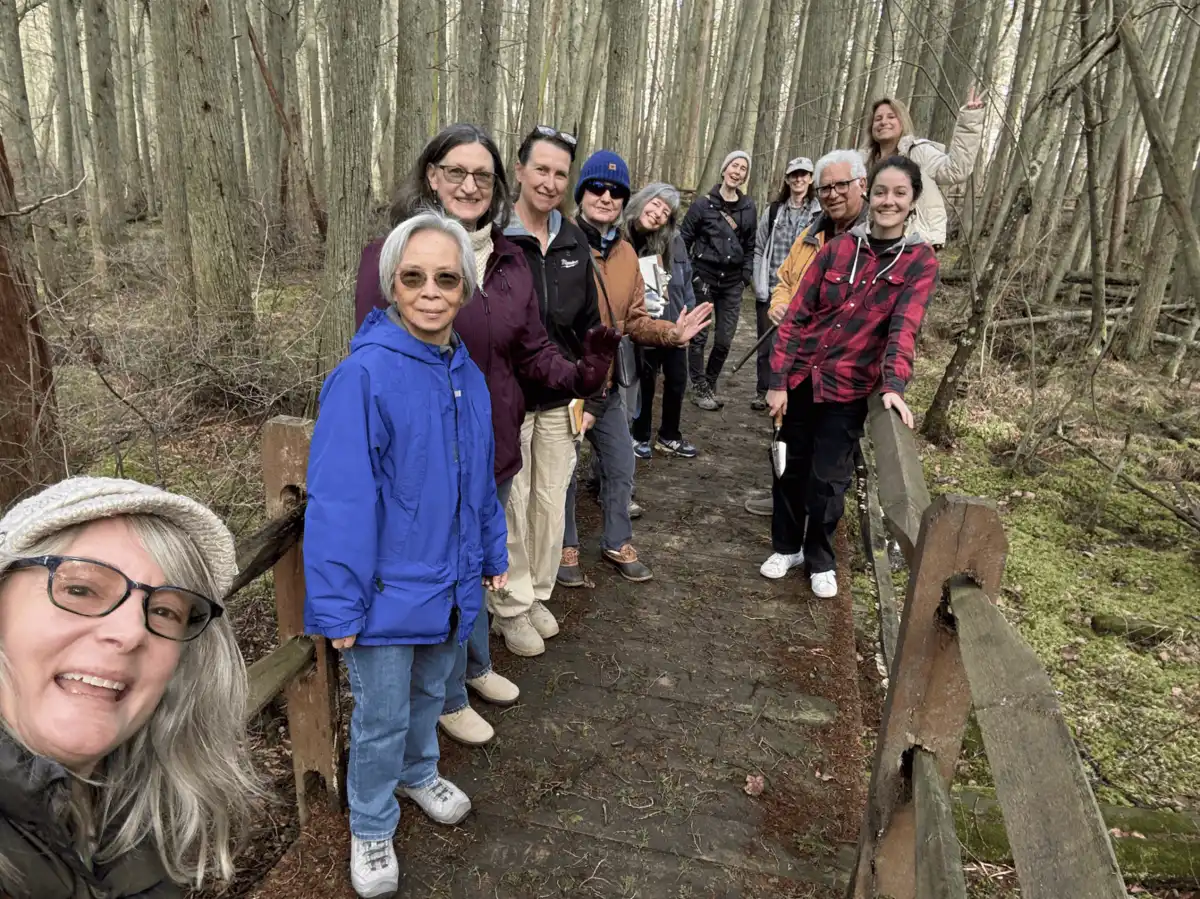
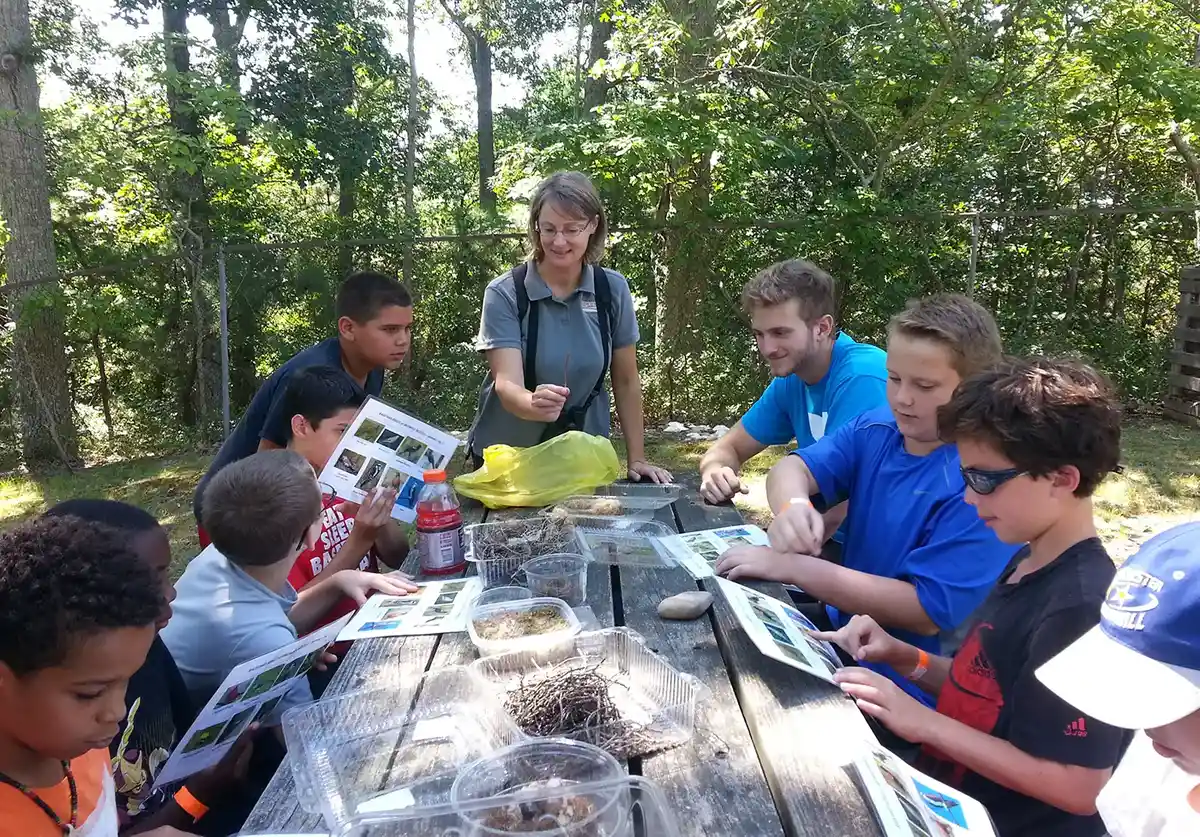
IN THE WOODS: Participants in Laboy’s 2026 Pinelands Short Course class get outdoors.
The annual Pinelands Short Course, hosted by the New Jersey Pinelands Commission, was another important part of Laboy’s professional journey.
“The day-long event brings together educators, conservationists, scientists, land managers and members of the public to explore the unique ecology, history and culture of the Pinelands,” she pointed out. “Being invited to present there gave me an opportunity to bring OCSCD’s work – and particularly the connections among soil, water, plants and sustainable landscapes – to an audience well beyond Ocean County. Over the years, the Short Course became a recurring opportunity to share ideas, learn from other professionals and connect with people working to protect one of New Jersey’s most remarkable landscapes: the Pine Barrens.”
In 2019, Laboy received the New Jersey Association of Conservation Districts’ Award for Outstanding Service as a Professional Conservationist.
“I was being recognized for work that felt to me more like opportunities to help save the planet,” she remarked. “Over the prior four to five years at the district, I felt the urgency to spread the word about the importance of soil as a vital natural resource. Looking back, that recognition represented something larger than a single accomplishment. It reflected the growing reach of the education and outreach program, and my determination to make soil conservation education relevant to people far beyond the traditional conservation audience.
“In good company,” she added, “my OCSCD colleagues working in the regulatory side of the district were recognized for their ‘Outstanding Implementation of the Soil Erosion and Sediment Control Program.’”
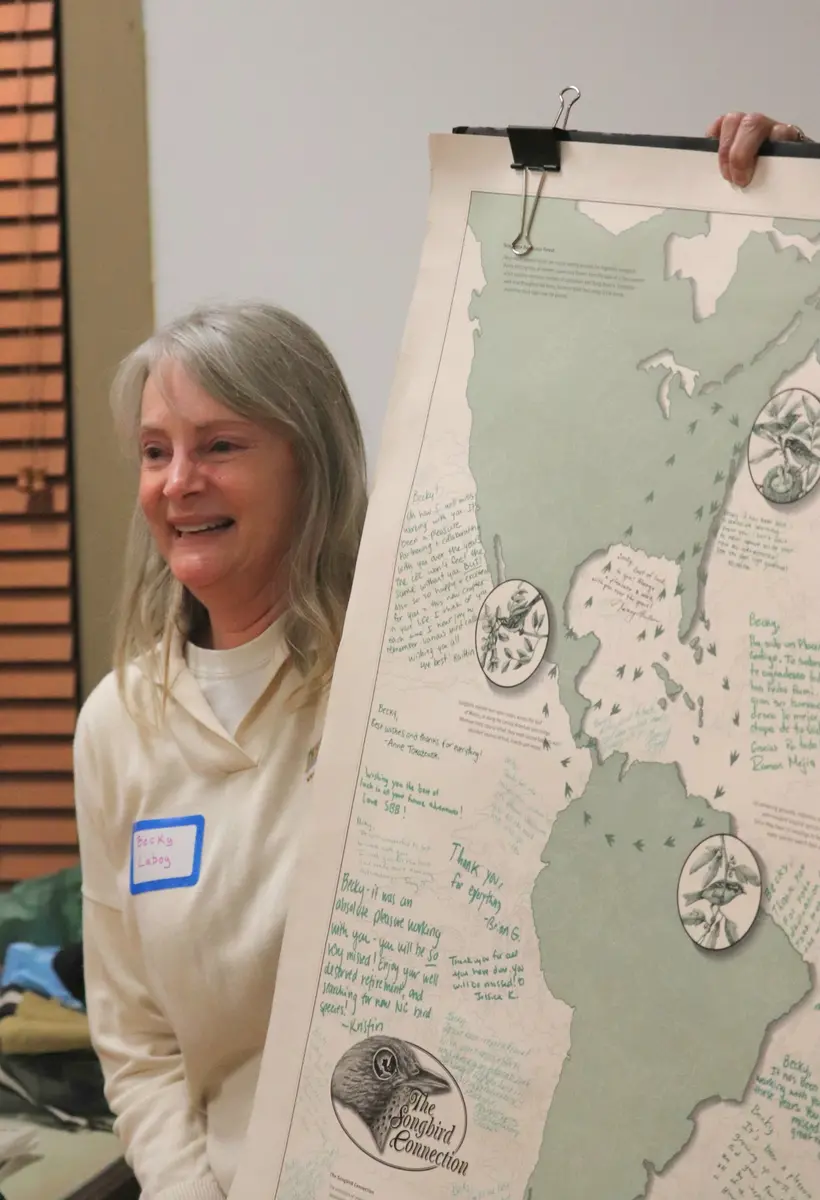
TEACHING TEACHERS: Laboy presents at the District’s 29th annual Barnegat Bay Environmental Educators Roundtable this past April.
Although the pandemic of 2020 brought an abrupt end to the in-person programs that had become such an important part of education and outreach for the OCSCD, conservation education didn’t stop.
“The world found new ways of connecting through webinars, online conferences and virtual presentations that reached people in the comfort of their own homes,” said Laboy. “The experience reinforced something I had already begun to understand: Education is adaptable. The format may change, but the desire to learn and to connect with people and the natural world doesn’t.”
That same year also marked the beginning of the New Jersey Bay Islands Initiative, a collaborative effort formed in response to the growing loss and degradation of the small bay islands that protect coastal communities and provide critical wildlife habitat. OCSCD was among the initiative’s founding partners, bringing the district’s soil, conservation, education and communications expertise to a partnership that grew to include municipalities, federal and state agencies, universities, nonprofits and concerned citizens.
“I became part of the communications team, helping tell the story of these often-overlooked islands and why their protection matters,” Laboy explained. “The group – originally led by Virginia Rettig, former refuge manager at the Edwin B. Forsythe National Wildlife Refuge, and currently led by Angela Andersen of the Long Beach Township Marine Field Station and Amanda Archer of Jacques Cousteau National Estuarine Research Reserve – works toward developing educational and outreach materials; documenting island conditions; participating in field trips and site visits; communicating about erosion and habitat loss; and helping connect the science of coastal change with the people who live, work and recreate along the bay.
“The initiative also provides opportunities to bring together scientists, educators, municipal officials, conservation organizations and community members around a shared concern: protecting the small islands that play such an important role in the health and resilience of New Jersey’s coastal ecosystem.”
By 2025, the education and outreach program had become a broad network of communications, conservation initiatives, school and community outreach programs, and community engagement.
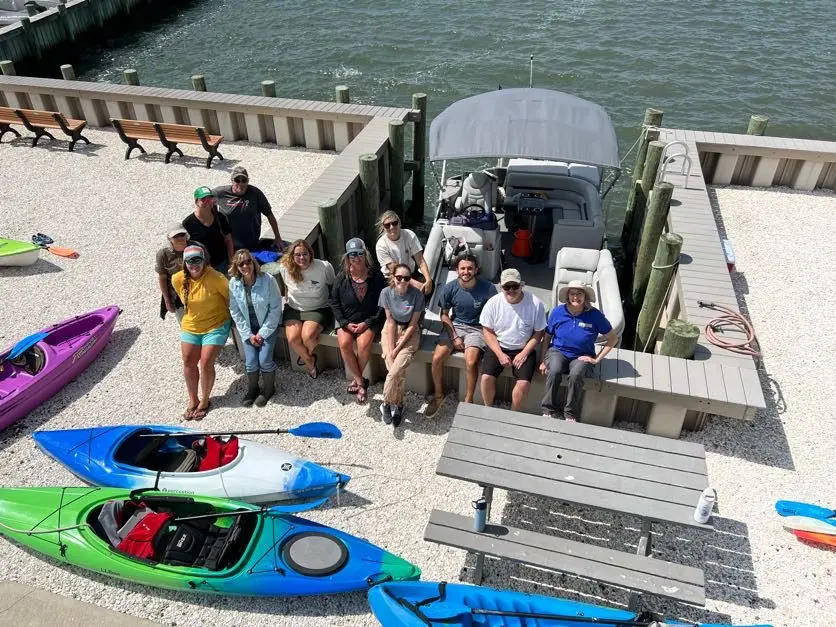
ON THE WATER: New Jersey Bay Islands Initiative members prepare for a site assessment of Clam Cove, in Holgate, 2023.
“One of the things I value most about these 12 years is how many wonderful people I engaged with – all extremely dedicated to the work,” Laboy continued. “I began listing everyone, and it went on for pages … and that’s really the point. Conservation education is a collaborative endeavor. The best programs were the ones where someone brought an expertise, someone else brought an idea, someone opened a door, and together we created something none of us could have created alone.
“When I accepted this position in 2014, I thought I was becoming an environmental educator. I never imagined how many other hats would become part of the job. Teacher. Writer. Photographer. Curriculum developer. Grant coordinator. Event planner. Webmaster. Mentor. Naturalist. Communicator. Storyteller. Some days required all of them.”
Although Laboy is leaving New Jersey, she isn’t leaving conservation.
“Nature has a wonderful way of following us wherever we go. And I look forward to exploring new landscapes, new soils, new birds, new native plants and new opportunities to continue sharing my passion for environmental education,” she said. “I leave knowing that OCSCD’s education program is stronger than ever. The partnerships are thriving, the momentum continues to grow, and there are many exciting opportunities ahead. I have every confidence that the district will continue inspiring future generations to care for our natural resources.”
Visit soildistrict.org to explore the many projects, programs, events and resources the OCSCD offers, as well as to read the district’s newsletters, blog and annual reports.