At the Barnegat Historical Society’s Heritage Village and Museum on East Bay Avenue, members often find themselves with projects, whether it’s maintenance or making improvements to keep the historical value intact.
Fronting the village are the Lippincott-Falkinburg House, which dates to the mid-19th century; and the Edwards House, believed to have been built in the late 18th century. The complex also features a butcher shop, barbershop, corn shed and cabin. All were moved to the village from their original sites, beginning with Lippincott in 1967.
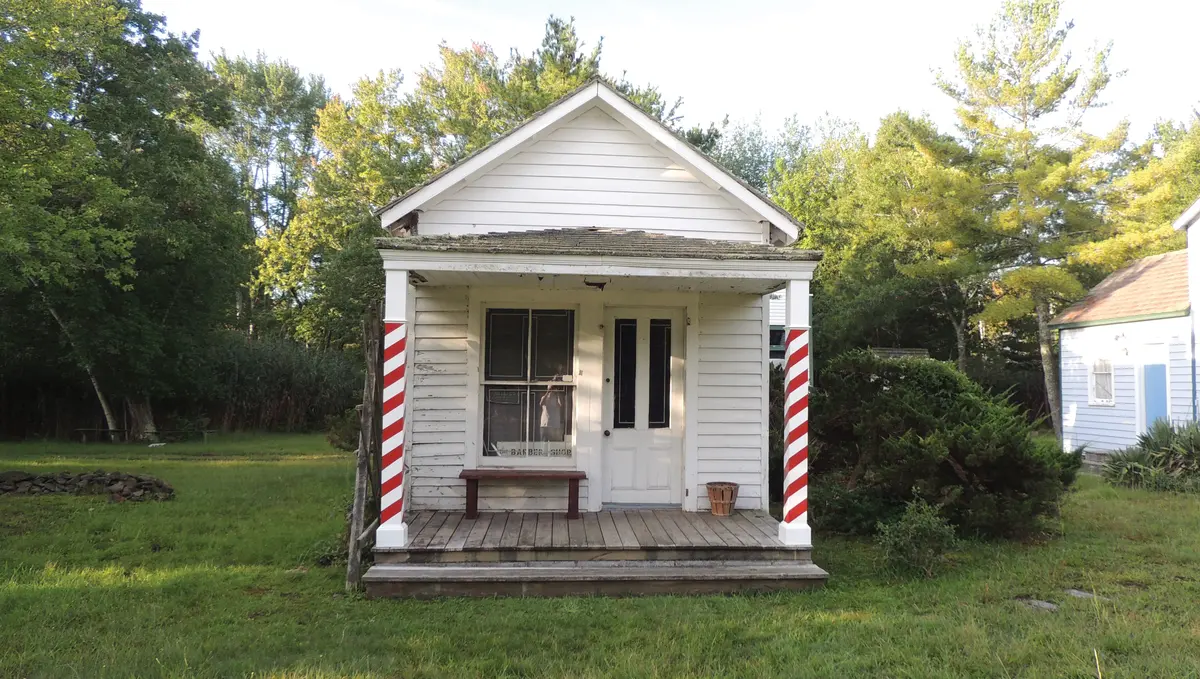
This year the focus has been on the barbershop, which was once known as the George I. Hopper Barber Shop and moved to the society’s complex in 1972. According to the society’s historian, Curtis Watts, the building’s original location was on the east side of Main Street (Route 9) one door south of East Bay Avenue. The building was believed to have been constructed sometime in the 1880s, and at that time was operated by Henry Gulick as a real estate office.
Watts said George I. Hopper subsequently purchased the building and converted it into a barbershop.
“In addition to his tonsorial services, Mr. Hopper also acted as a laundry agency, which was a drop-off location for local residents to bring in their dirty laundry for cleaning,” he said. “Mr. Hopper did not do the cleaning himself, but rather sent it to a commercial laundry for the actual laundry service.
“Over its years of operation, Mr. Hopper’s barbershop became a convivial gathering spot for locals, to spend time together solving the problems of the world.”
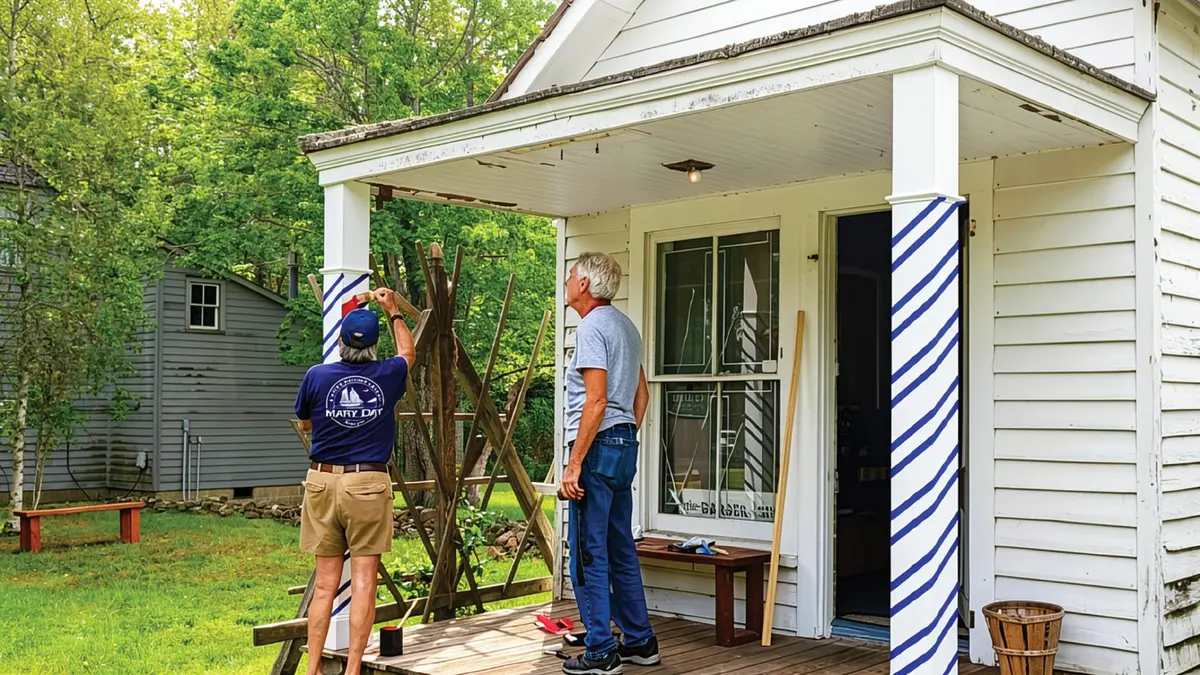
Watts said photos taken in the 1920s show the barbershop did not sport the traditional barber pole, but rather the two front porch columns were simply adorned with painted red and white stripes.
“The significance of the colors comes from earlier days when the services of barbers-surgeons, as they were referred to, included bloodletting, tooth extractions and the setting of bones,” Watts said. “Therefore, the colors represented the bandages used during bloodletting, white for the clean bandages and red for the blood-stained bandages after usage.
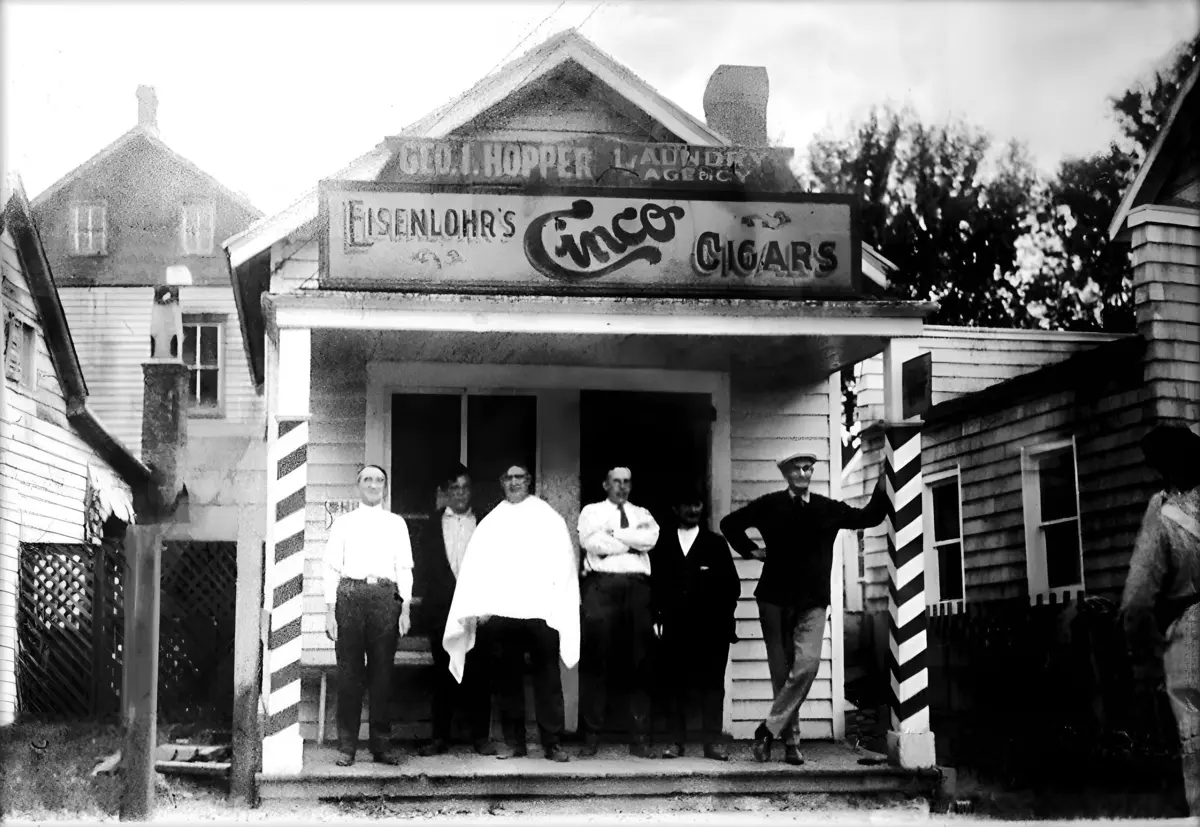
“The red and white stripes were present when the barbershop was originally relocated to its present site. However, over the years and several re-paintings, the stripes simply ceased to exist. Therefore, in an attempt to bring the George I. Hopper Barber Shop back to its original appearance, the red and white stripes were returned to the front of the shop.”
Watts, along with society President Gary Brower, volunteered to undertake the project, which was completed last month. During that time, Brower undertook the arduous task of masking the poles for the subsequent painting. Next, Brower and Watts meticulously reproduced the look of the barbershop as it was in its heyday.
“Now that this is done, we’ll be looking at reopening the butcher shop,” said Brower.