The Sherrill administration has requested expedited emergency federal assistance to repair and restore beaches in eight Army Corps of Engineers project areas that were severely damaged during the nor’easter that hammered the state late last month, including Long Beach Island. State officials are asking for the assistance under Public Law 84-99, which provides the Army Corps with authority to aid state and local governments with storm preparedness, response and recovery actions.
The Island project area is designated as “Barnegat Inlet to Little Egg Inlet, Long Beach Island, New Jersey Hurricane and Storm Damage Reduction Project” by the Army Corps, Philadelphia District.
“We are working to get our coastal communities every resource they need to recover from the recent nor’easter and replenish the beaches and dunes that protect residents, homes, and businesses,” Gov. Mikie Sherrill said last week. “I thank (the Department of Environmental Protection) for swiftly completing its damage assessment so we can pursue federal assistance without delay. My administration will continue working closely with these communities to secure the support they need to remain resilient throughout storm season.”
According to DEP Commissioner Ed Potosnak, “DEP dispatched resources swiftly to assess the impacts of this storm, which battered beaches and dunes for days. In many communities, beaches maintained by the Army Corps of Engineers that provide important storm protection sustained extensive erosion and are now extremely vulnerable heading into the winter season. It is imperative that we get sand back on these beaches and make other necessary infrastructure repairs as quickly as possible to protect property, lives and coastal economies.”
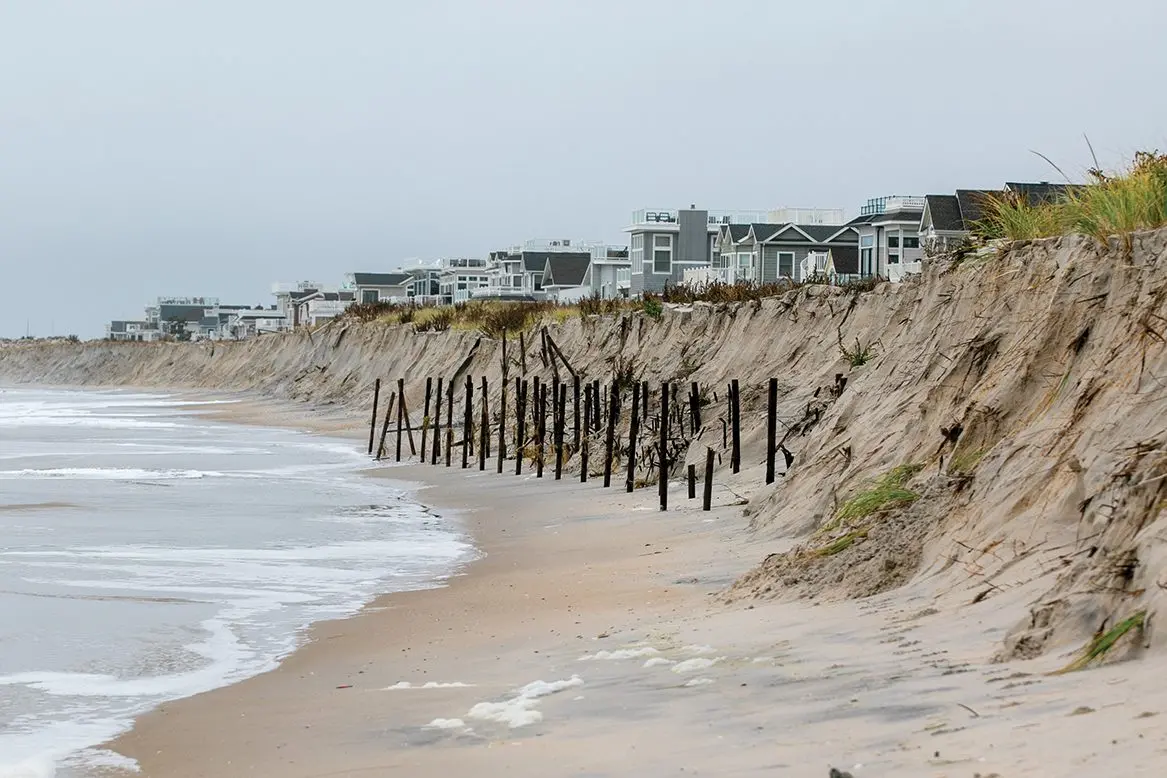
A post-storm assessment by the DEP’s Office of Coastal Engineering noted that while many beaches withstood the impacts of the nor’easter, the storm left many areas with heavily sloped erosion; exposed groins, which are coastal protection structures constructed perpendicular to beaches; and increased wave runup frequency to upper beaches, seawalls and dunes.
The assessment determined that the eight federal coastal storm risk management projects were significantly damaged and are now “vulnerable to future catastrophic failure without near-term repair.”
In response to the state’s request for emergency federal assistance, 9th District Sen. Carmen F. Amato Jr. and Assemblyman Brian E. Rumpf and Assemblyman Gregory E. Myhre remarked, “As coastal legislators, our delegation strongly supports restoring effective coastal risk reduction projects undertaken by the U.S. Army Corps of Engineers to protect New Jersey’s coastline, especially following the damage caused by the recent nor’easter.
“Several areas within our legislative district, including Long Beach Island, have experienced severe flooding and beach erosion, resulting in dramatic sand cliffs and significant shoreline loss. New Jersey needs both short- and long-term funding for beach replenishment projects to protect lives and property, strengthen coastal resilience and prevent significant disruptions to our state’s vital tourism industry.”