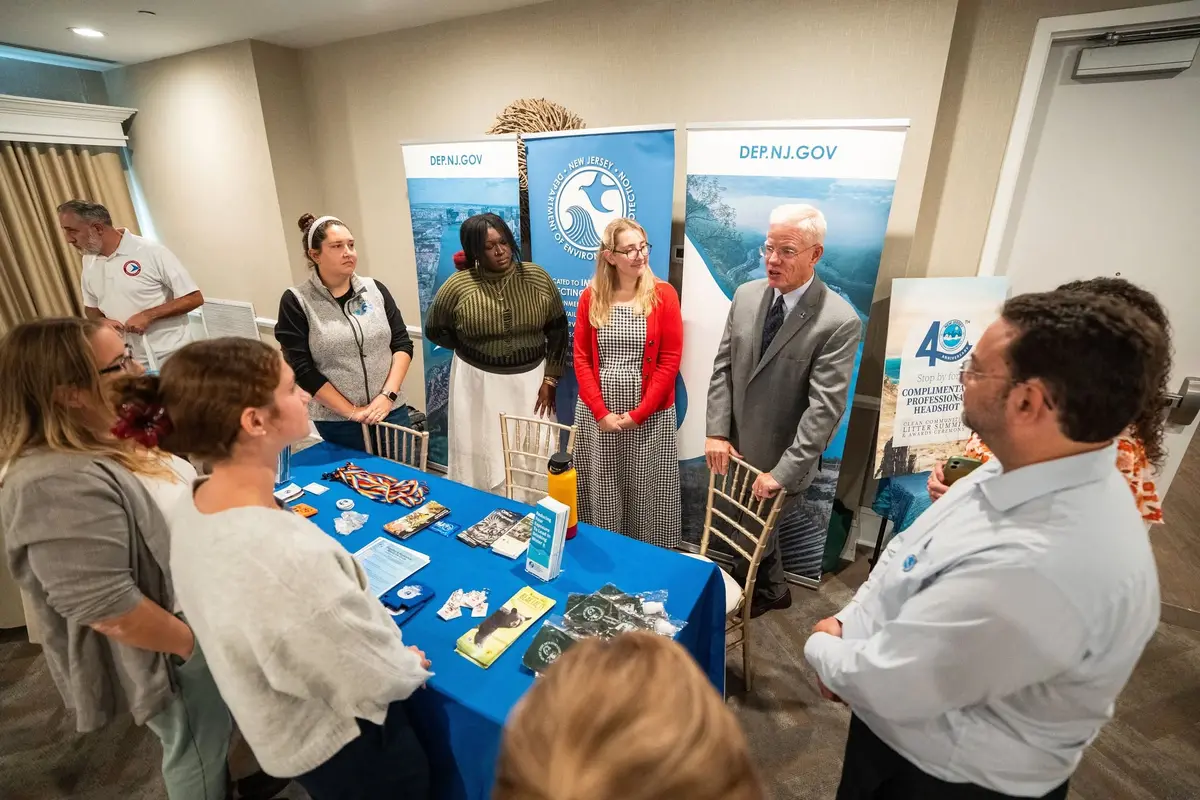
Environmental professionals, community leaders and conservation partners gathered last week for a two-day workshop hosted by the New Jersey Clean Communities Council and Ocean County Clean Communities intended to raise awareness about litter, foster education and develop leadership in environmental stewardship.
Day one of the “litter summit,” last Thursday, Oct. 8, included guest speakers, an educational expo and a graduation and awards ceremony honoring those working to keep the state clean. The following day, participants visited the Tuckerton Seaport to check out the Tucker’s Lighthouse Museum, join a floating classroom on the Tuckerton Creek, see the Jacques Cousteau exhibit and take part in creating a sustainability quilt.
New Jersey Clean Communities is a statewide, comprehensive litter-abatement program created by the adoption of the Clean Communities Act in 1986. The measure provides a funding source for the program by placing a tax on various categories of businesses that may produce litter-generating products.
According to the NJCC, the Clean Communities Program Fund generates about $20 million each year; this is disbursed annually to municipalities (80%), counties (10%), state parks service (10%) and the New Jersey Clean Communities Council Inc. ($375,000).
JoAnn Gemenden, NJCC executive director, welcomed attendees to The Mainland Holiday Inn in Manahawkin for Thursday’s event, and thanked Tanara Hall, Ocean County Clean Communities coordinator for Ocean County; Margaret Deleon-Rivera, administrative analyst for the Ocean County Department of Solid Waste Management; and their team for organizing the workshop.
The day’s first guest speaker was Frank Sadeghi, director of the Ocean County Board of Commissioners, who called NJCC “an essential partner,” helping to keep all corners of the state healthy and clean for future generations.
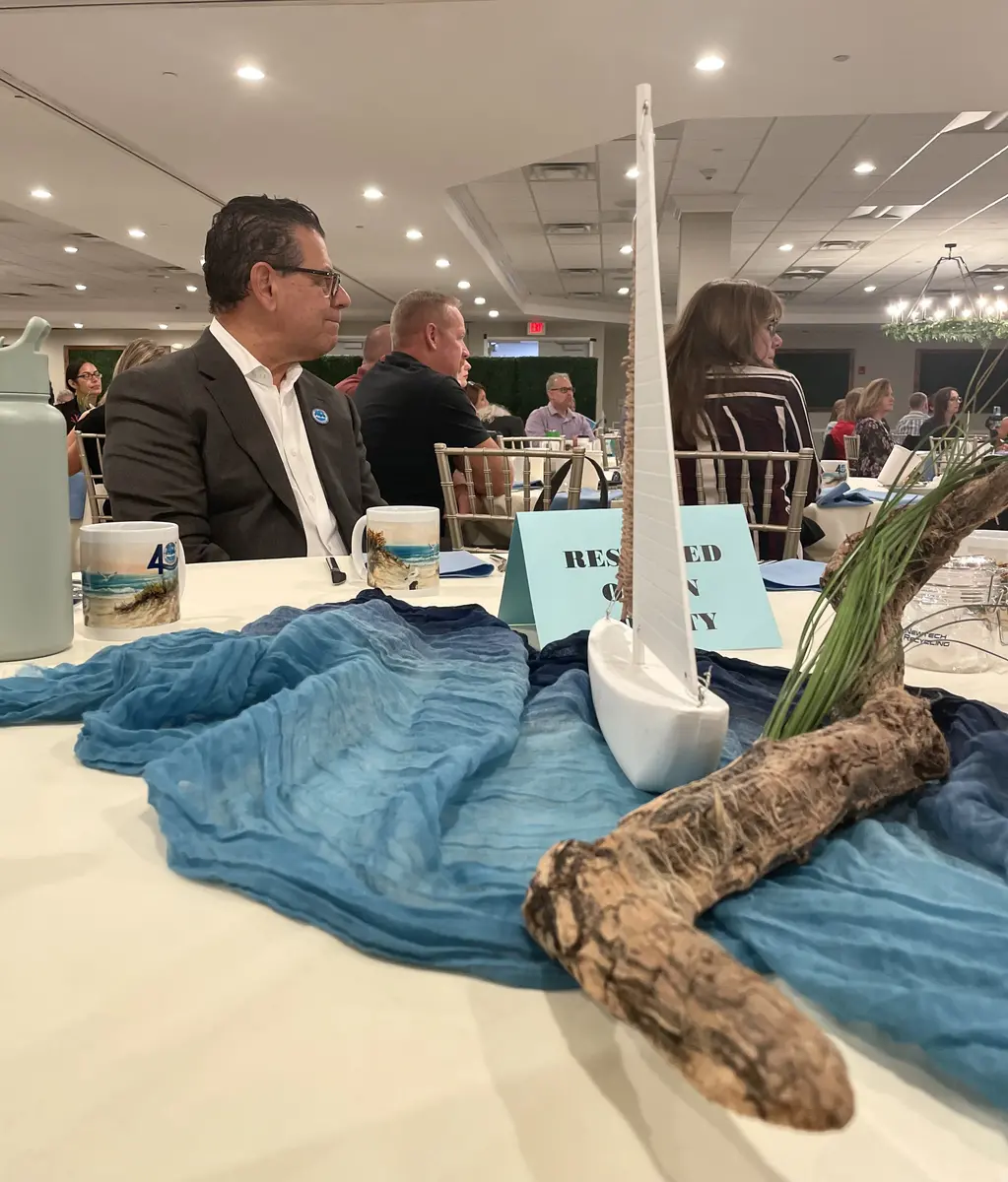
Frank Sadeghi, director of the Ocean County Government Board of Commissioners, prepares to present.
Sadeghi detailed some of Ocean County’s essential environmental projects, such as its pump-out boat program, its recycling program and the efforts to protect farmland and open space via the Natural Lands Trust Program, which has preserved 30,000 acres of land through an open space tax.
“The level of growth in Ocean County is unprecedented,” noted Sadeghi, who added he “can’t blame” people for moving to a place with great beaches, boardwalks, charming downtowns and a terrific quality of life. But more residents beget “increased pressure on our environment and natural resources” – making the partnership with NJCC even more important.
Save Barnegat Bay Executive Director Britta Forsberg spoke next, pointing out that in New Jersey, “We’re loving (our waterways) to death.”
“Save Barnegat Bay has been devoted to this waterway for more than five decades,” she remarked. “Barnegat Bay suffers from water quality impairments due to nutrient enrichment and pathogen pollution,” caused by nonpoint source pollution from runoff that carries pollutants – fertilizers, herbicides, insecticides, animal waste, oil, trash – into nearby waters.
The organization aims to partner with the 38 municipalities in the watershed – which includes 33 municipalities in Ocean County, four in Monmouth County and one in Burlington County – to help protect this ecosystem. SBB hosts rain barrel workshops; cleanups; school outreach; free educational and technical workshops for elected officials, public works employees, planning and zoning boards, environmental commissions and the public; and more.
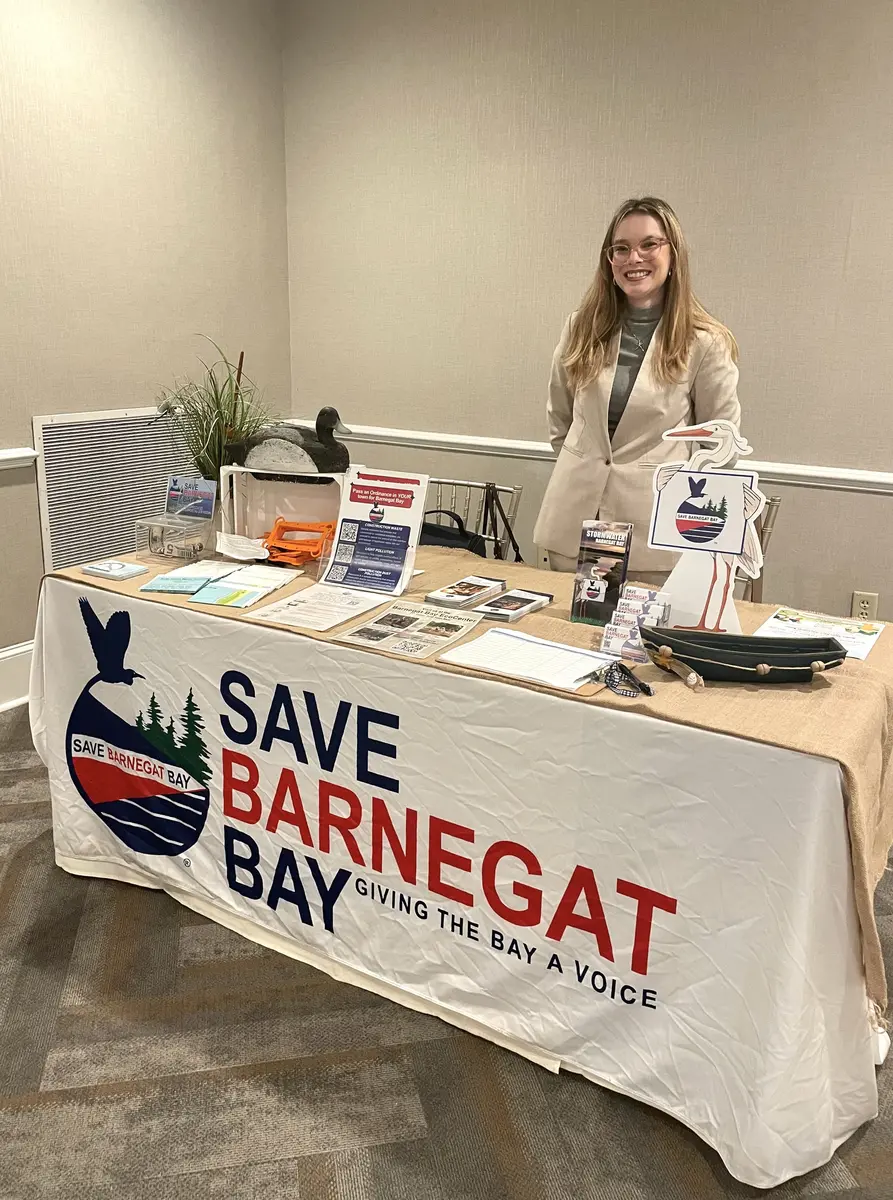
Brittany McLaughlin, executive assistant and community engagement coordinator at Save Barnegat Bay, tables at the litter summit.
SBB will work with any interested partner communities to “chart a course – where we are today and where we are trying to get to,” said Forsberg.
Cindy Zipf, executive director of Clean Ocean Action, founded in 1984, noted, “Everyone who enjoys the ocean has a personal passion and a personal story.” The ocean, she added, provides recreation, jobs and oxygen, and is a buffer against climate change – an “under-recognized value” and one that is “provided free of charge … all we have to do is leave her alone.”
Zipf pointed out the many species of whales, dolphins, sea turtles, seals, birds and fish that live in the ocean near us, and how important it is to protect them.
Years ago, Clean Ocean Action jumped in to help to combat issues such as ocean dumping. Today, we are still dealing with “people pollution,” including plastic debris, which negatively impacts marine life as well as humans, as we find more and more plastic in the food chain. “This is a global self-inflicted health crisis of unbelievable proportions,” Zipf emphasized.
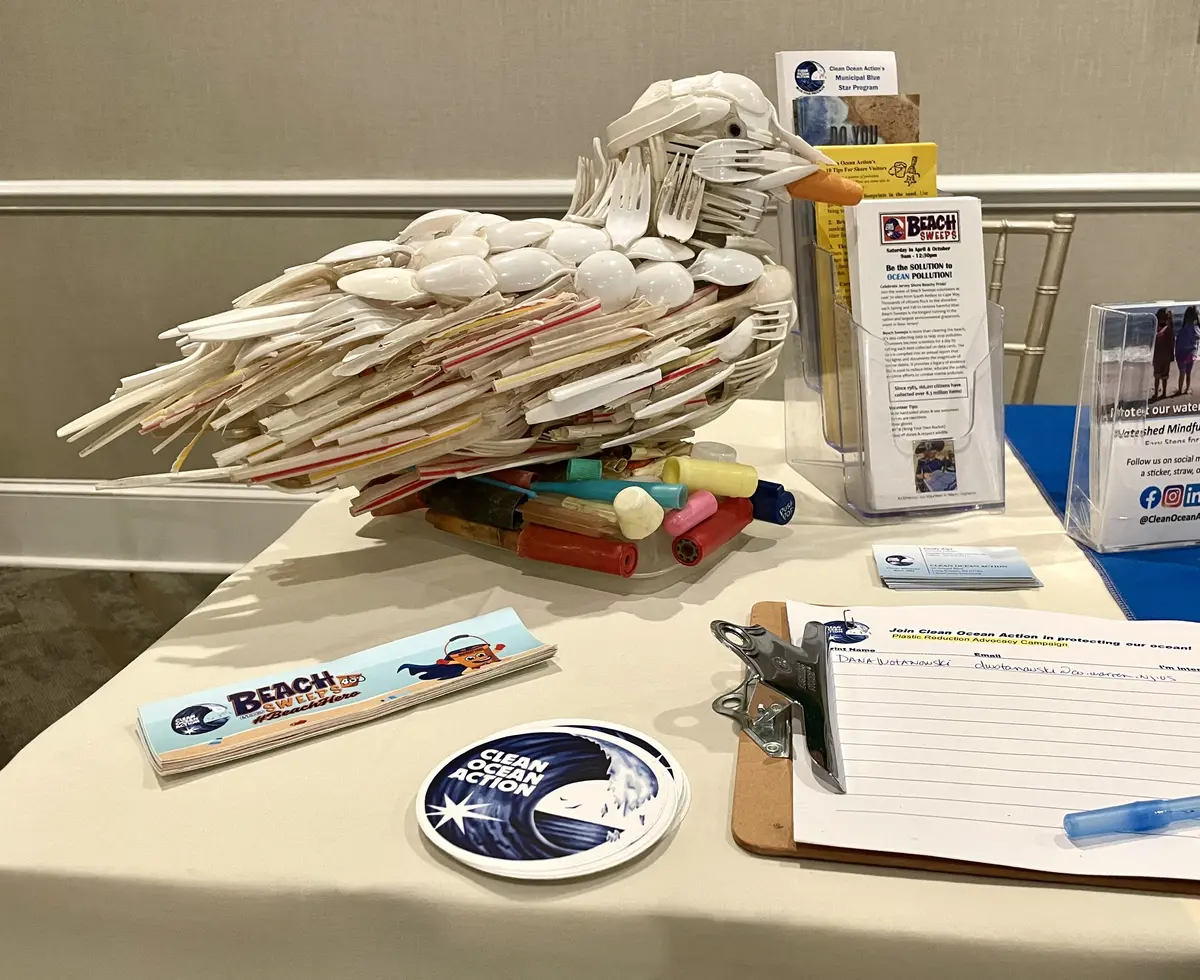
The Clean Ocean Action table features a bird made from plastic marine debris.
As Zipf explained, COA’s Beach Sweeps were established more than 40 years ago to help keep New Jersey’s beaches and waterways clean, and they continue to run twice each year, in the spring and the fall. Volunteers meet at one of 80-plus sites throughout the state to spend a few hours picking up trash and recording data that is used to better understand and prevent marine pollution.
This fall’s Beach Sweeps are scheduled for Saturday, Oct. 24. To take part, register at cleanoceanaction.org/beach-sweeps.
While sweeping the beaches, participants always find some wacky items – which may make it onto the “Roster of the Ridiculous” – and the organization collates what type of garbage is most prevalent, listing the top 12 types of trash as its “Dirty Dozen.”
The data collected from Beach Sweeps has helped influence key laws for the state, including Skip the Stuff, Get Past Plastic, the smoking ban on beaches and more.
Zipf also mentioned a new measure, N.J. Senate Bill S4656, titled the Protect our Health from Plastics Act, introduced by State Sen. Bob Smith (D-17th Dist.) earlier this month. The bill – which would require a reduction in plastic packaging, prohibit the presence of certain harmful substances within plastic packaging and define advanced or chemical recycling methods as disposal rather than recycling – has been referred to the Senate Environment and Energy Committee.
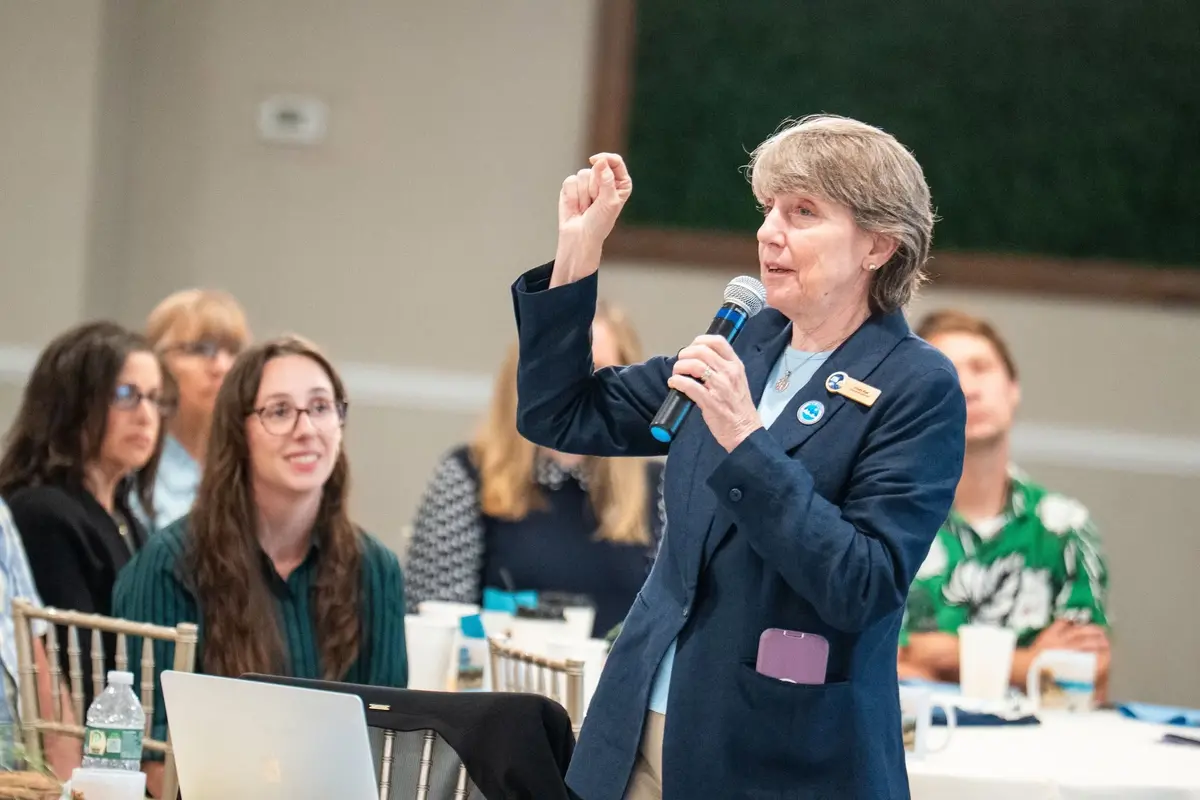
Cindy Zipf, executive director of Clean Ocean Action, explains the nonprofit’s work, including Beach Sweeps. (Supplied Photo)
Also presenting on Thursday was Maria Johnson, a former educator who is now with NJCC. Johnson detailed the “Love Where You Learn” litter-free school zone program. The New Jersey Clean Communities Council is inviting public and private schools across the state to take part in this new initiative designed to reduce litter on school property while teaching students about environmental responsibility.
Participating schools commit to conducting at least two litter cleanups on school property during the school year while incorporating litter awareness and education into the effort. Schools will also receive official “Litter Free School Zone” signage as well as certificates.
“Schools are where lifelong habits are formed, which makes them an ideal place to reinforce the importance of preventing litter and caring for our shared environment,” Gemenden said in a September press release about the initiative. “‘Love Where You Learn’ gives students an opportunity to do more than hear about environmental stewardship. They can put what they learn into action, see the results of their work and understand that keeping the environment clean is a shared responsibility.”
According to Johnson, local Clean Communities programs serve as the point of connection, and offer valuable resources, for participating schools. To take part, school staff begin by securing approval from their principal or board of education and identifying a school representative. The school then connects with its nearby Clean Communities coordinator, completes a participation agreement and orders its personalized “Litter Free School Zone” sign.
Schools interested in joining “Love Where You Learn” can read more at njclean.org.
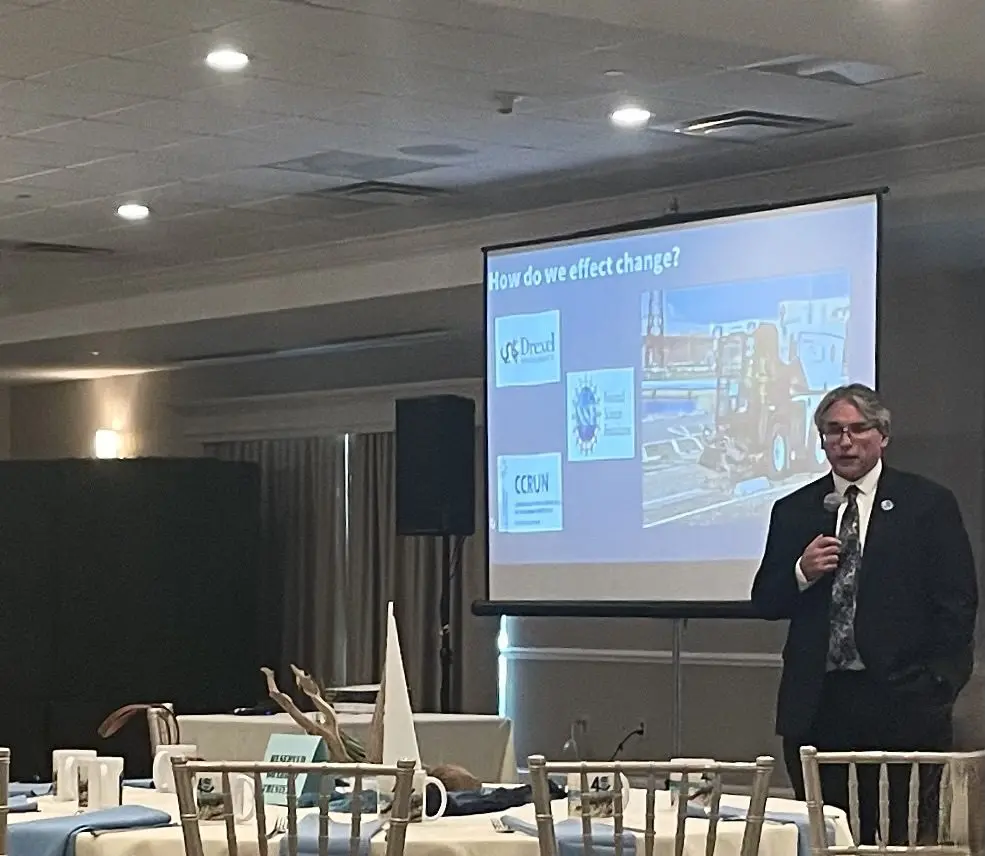
Matthew von der Hayden serves as Stafford Township’s administrator, deputy clerk and director of the water and sewer department.
Matthew von der Hayden, Stafford Township administrator, deputy clerk and director of Water and Sewer, spoke to Thursday’s event attendees about various projects he and the township Green Team undertake to keep the municipality clean.
Von der Hayden discussed in detail the Cleanlet app – for crowd-sourcing management of pluvial flood risks – which the township is trying out based on a request from Drexel University. The app was designed by researchers at the Sustainable Water Resources Engineering Lab at Drexel through a National Science Foundation-sponsored grant, and it is still in the testing phase.
As explained on cleanletapp.cae.drexel.edu, “Our sewer systems were designed to safely convey stormwater away from buildings, roads and people. But leaves, litter and other forms of debris can block the sewer inlets, causing floods.
“As hinted not so subtly by its name, the Cleanlet App was developed to help keep inlets clean. Inlets that seem to get clogged regularly are registered in the Cleanlet database. The app reads the weather forecast for each inlet location, and then Cleanlet users are notified when rainfall is forecasted at registered inlets that are near them. Like Uber drivers, Cleanlet users can choose to accept the request to clean and are awarded points based on how efficiently they do the work.”
As von der Hayden noted, “The app allows people to sign up and take ownership of inlets in the township,” and to participate in a bit of inlet-cleaning competition, with winners in Stafford taking home gift cards.
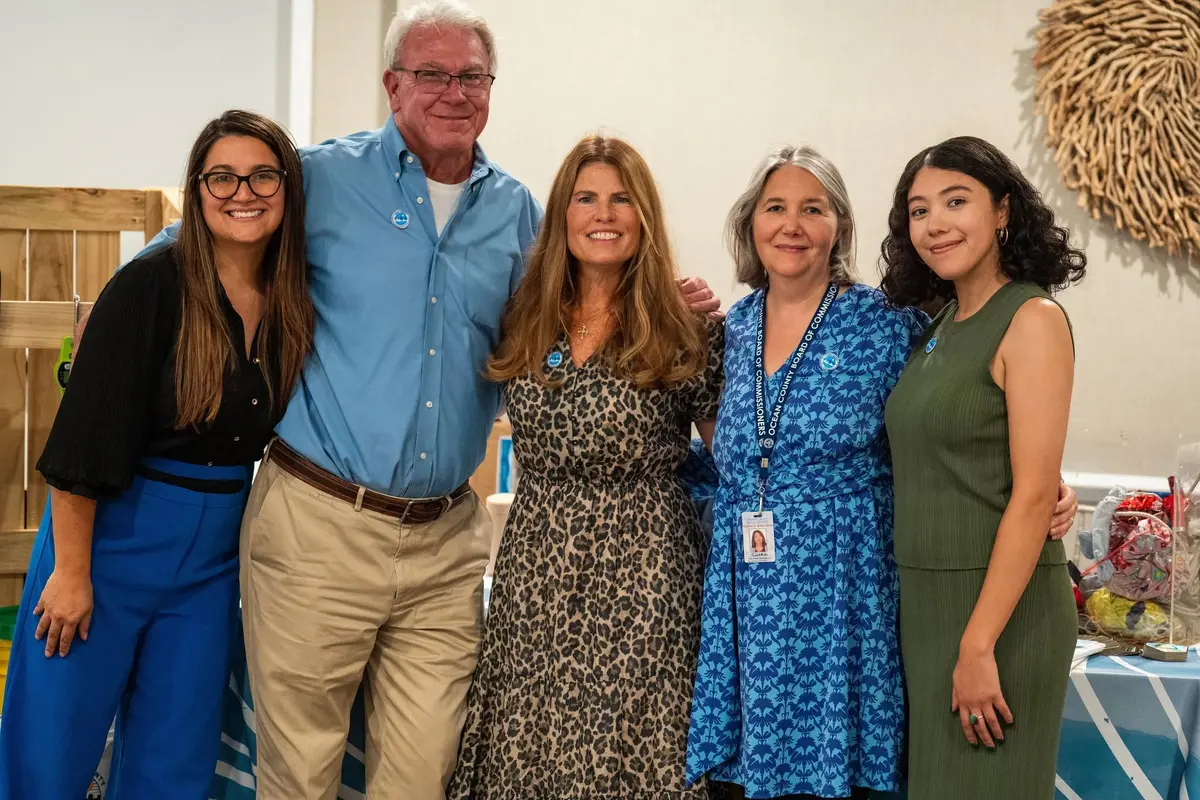
This year’s event was organized by Ocean County Clean Communities in partnership with the New Jersey Clean Communities Council. (Supplied Photo)
The app is free from the Apple App Store or Google Play Store.
Ben Wurst, senior wildlife biologist with the Conserve Wildlife Foundation of New Jersey, was the day’s final speaker. The nonprofit, he explained, was founded 35 years ago to support threatened and endangered wildlife in the state, from salamanders to beach-nesting birds to falcons.
Wurst oversees the N.J. Osprey Project, and has worked extensively with this and other vulnerable species for more than 20 years. “Ospreys are highly adapted to thrive on our coast” and are the only bird of prey that nests close to human development, he said.
Unfortunately, an entwining of ospreys and marine debris is seen – sometimes literally – in the birds’ nesting platforms here on the coast, as they collect material from the ground nearby to build and “decorate” their nests. A lot of marine debris can be found in our waters and shores, especially after a storm. The amount of plastic debris in ospreys’ nests is often a good indication of how much plastic debris is in the vicinity, Wurst noted.
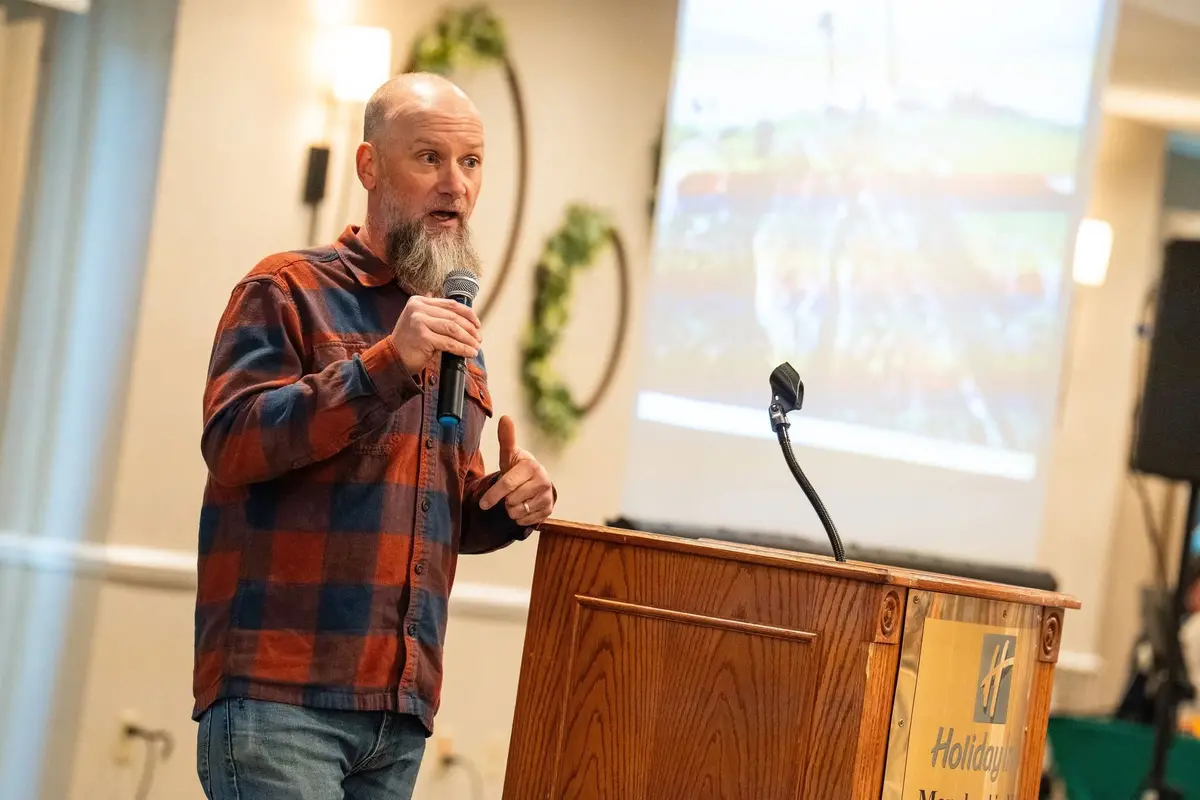
Conserve Wildlife Foundation of New Jersey senior wildlife biologist Ben Wurst discusses the effect of plastic pollution on ospreys. (Supplied Photo)
Ospreys can get tangled in the marine debris, like plastic bags, and balloons and strings. Once, Wurst recalled, someone was watching a nest cam set up in Island Beach State Park and spotted an osprey chick stuck in a plastic bag in its nest. (The chick was freed from the bag.)
Over a decade ago, he also noted, he was in Little Egg Inlet to check a nest, and the individual assisting him saw a balloon on the marsh and went to retrieve it. “When he came back, maybe 15 minutes later, he had over 100 balloons,” said Wurst.
In addition to the problem of marine pollution, ospreys are also facing increased food stress and brood reduction due to a lack of Atlantic menhaden, also known as bunker, which is their primary prey. In response to a question from Zipf, Wurst explained that menhaden is harvested on a large scale for industrial reduction into products such as fertilizer, animal feed, fish meal and fish oil supplements. There now appear to be fewer bunker in the ocean for ospreys and other predators, such as striped bass, bluefish, whales and dolphins.
“Ospreys are important indicators of the health of our ecosystem,” said Wurst. They are sensitive to changes in our environment, so they show us when something is amiss. “They can thrive if we give them the opportunity to do so.”
Learn more about New Jersey Clean Communities at njclean.org.