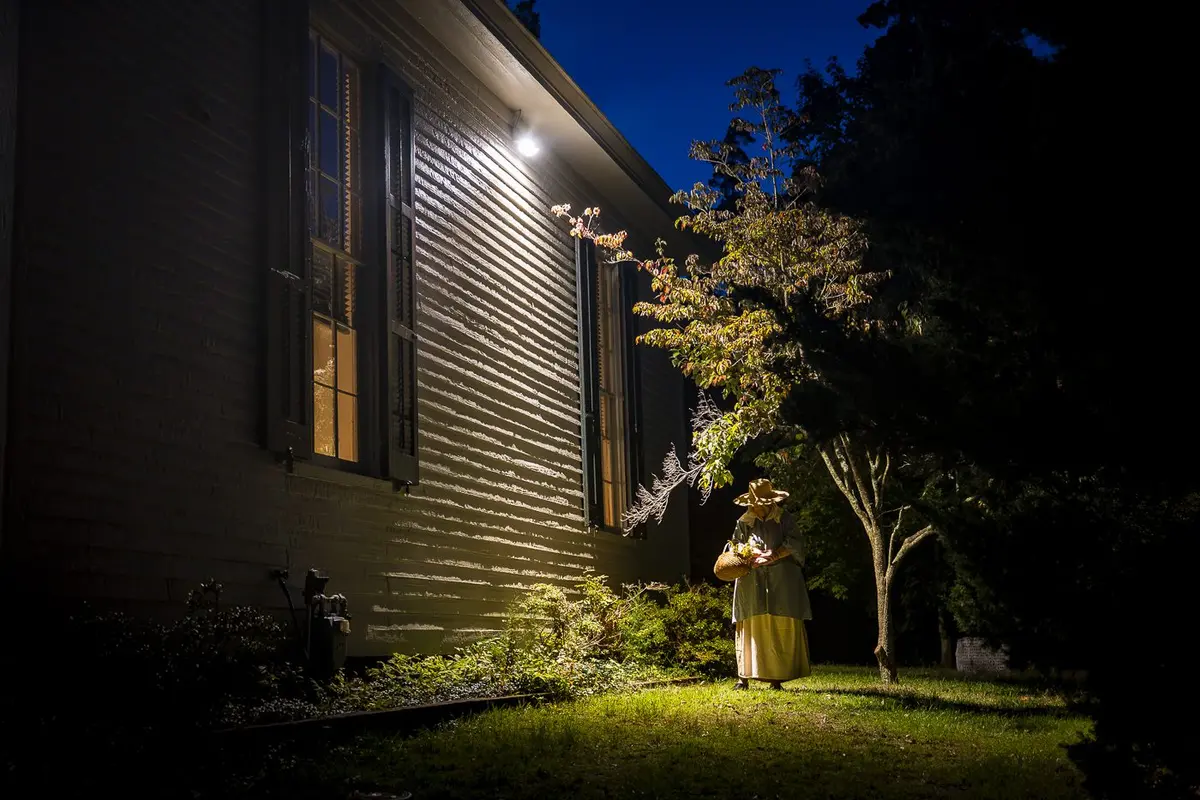
It’s not every day that one comes face to -face with the ghost of Ebenezer … Tucker, of course, the “founding father” of Tuckerton. On a dark, dreary October night, the ghosts of Tuckerton’s past came back to haunt some of its residents – or rather, fill them in on some important history, with the hopes of their legacies standing the test of time.
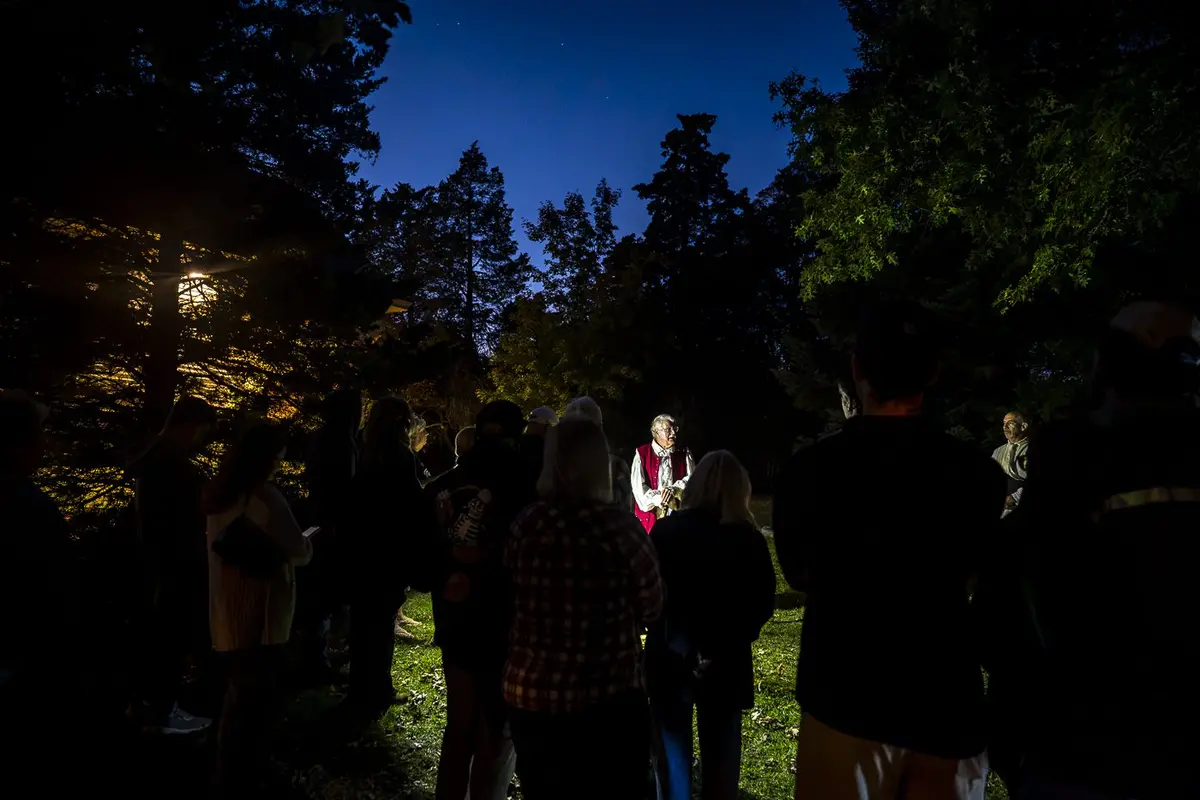
On one of the Tuckerton Historical Society’s special walking tours, participants traveled through time to hear “haunted” historical stories directly from (the ghosts of) figures who helped to establish the area as we know it today. Friday evening, Oct. 16, drew more than 20 people, some interested in all things eerie, and some enthusiasts of local history.
The tales of Tuckerton’s past began in the United Methodist church, which has existed for much longer than its current building has at 134 North Green St.; its original 110-year-old building was lost in 1979 after a devastating fire swept through town, damaging the church and multiple businesses and homes in the area. All that remains are the clapper for the bell and a stained glass window, both on display in the church today.
Creeping along the sidewalk from the church to the grounds of the historic Quaker meeting house, walkers prepared themselves to encounter some spirits. Before any scares could catch them by surprise, they learned that the Quakers, many of whom occupied Tuckerton in its early days, were often buried in “burial grounds” rather than traditional cemeteries, sometimes with no headstones or identifying marks.
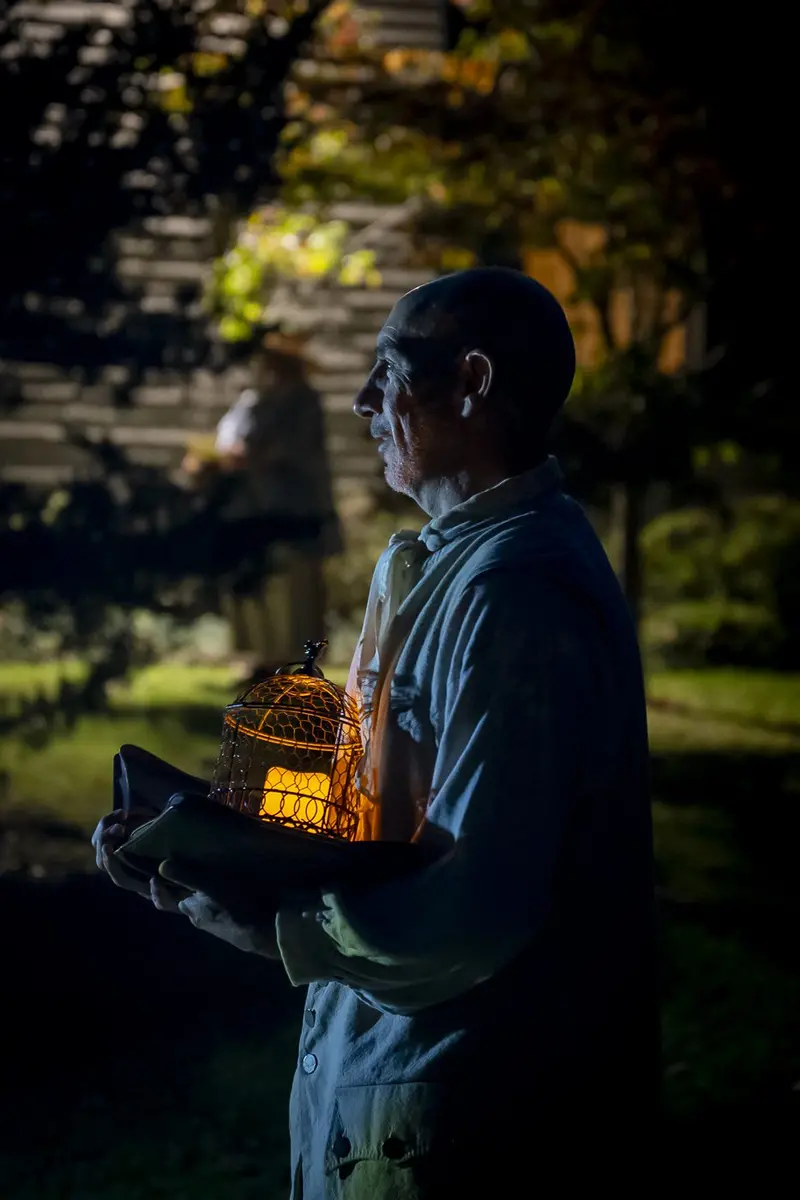
Out of the trees emerged a shadowy figure carrying a lantern who introduced himself as Edward Andrews. Regarded as one of the original settlers of the area, Andrews owned 500 acres on the east side of Tuckerton Creek, while his brother Mordecai owned the land on the west side. He built the grist mill, which still exists in Tuckerton to this day. Andrews was inspired by the Quaker teachings and eventually donated land to establish the meeting house. He was taken by smallpox in 1716.
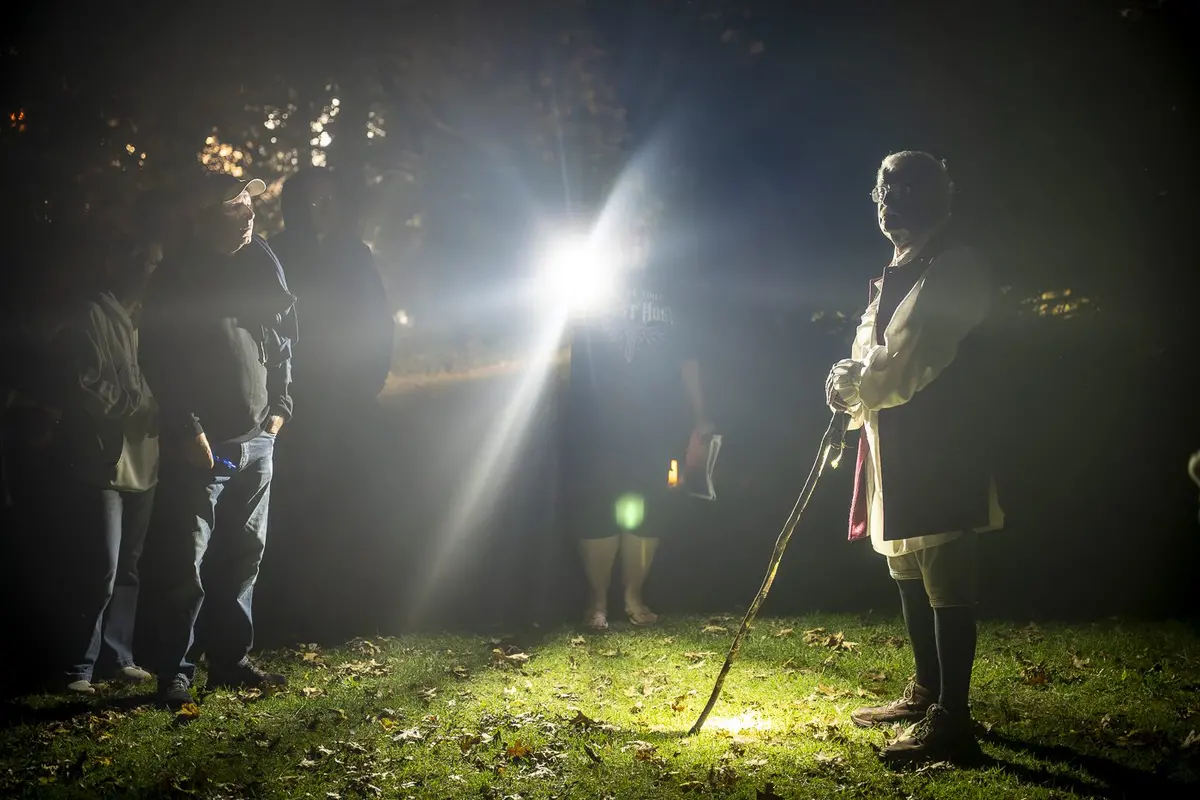
The next ghost was not far behind; also buried on the site is the “Great” John Mathis, who is acknowledged as a very important figure in early Little Egg Harbor and Tuckerton history. Mathis’ ghost told of his life: He married Alice Andrews-Higbee, who was a “strong-willed and business-minded woman, and many thought that she was the great woman behind the great man.” Mathis purchased Biddle’s Island on the Bass River, and eventually accumulated thousands of acres of land from Wading River to across Bass River to Little Egg Harbor.
“Even though I was wealthy, I shared my money with the community,” he said.
The Mathis name became well known in the shipbuilding industry, and Mathis was very involved when the Revolutionary War came to the area. He lived to 89 years old and died in 1779.
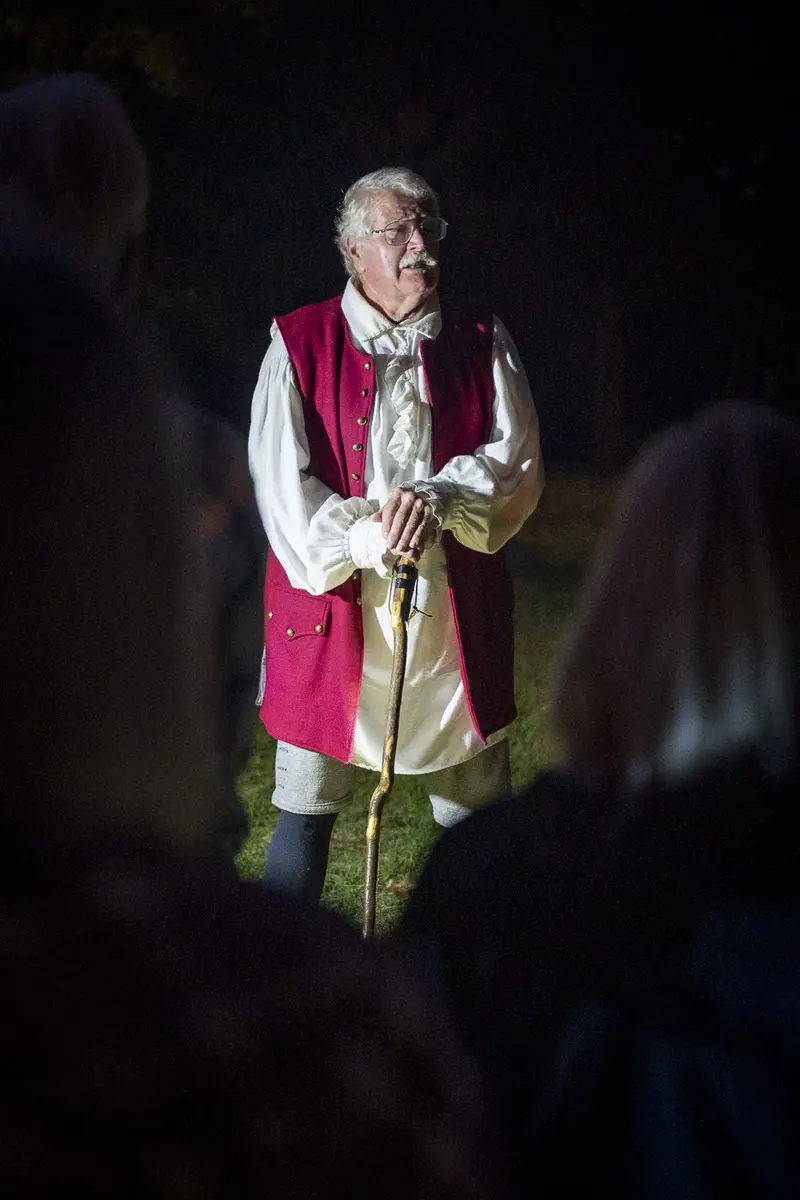
The ghost of the ‘Great’ John Mathis tells stories of his years in early Tuckerton.
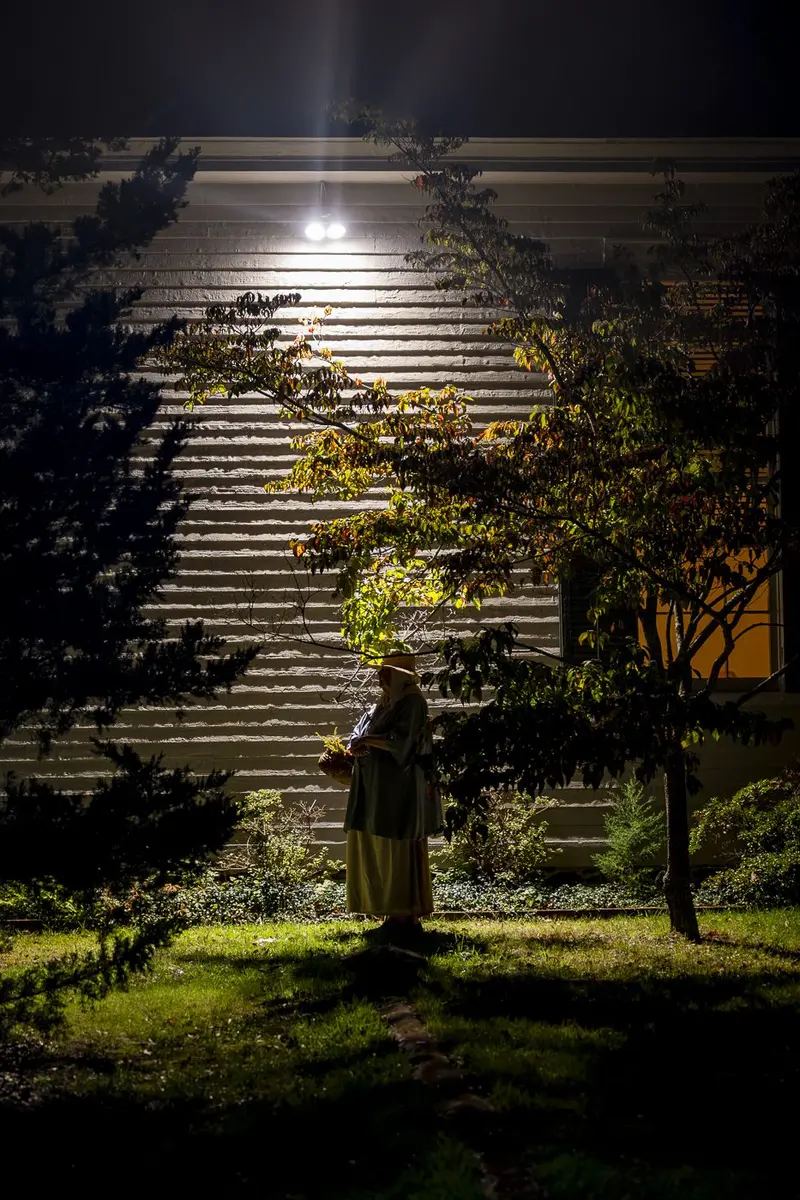
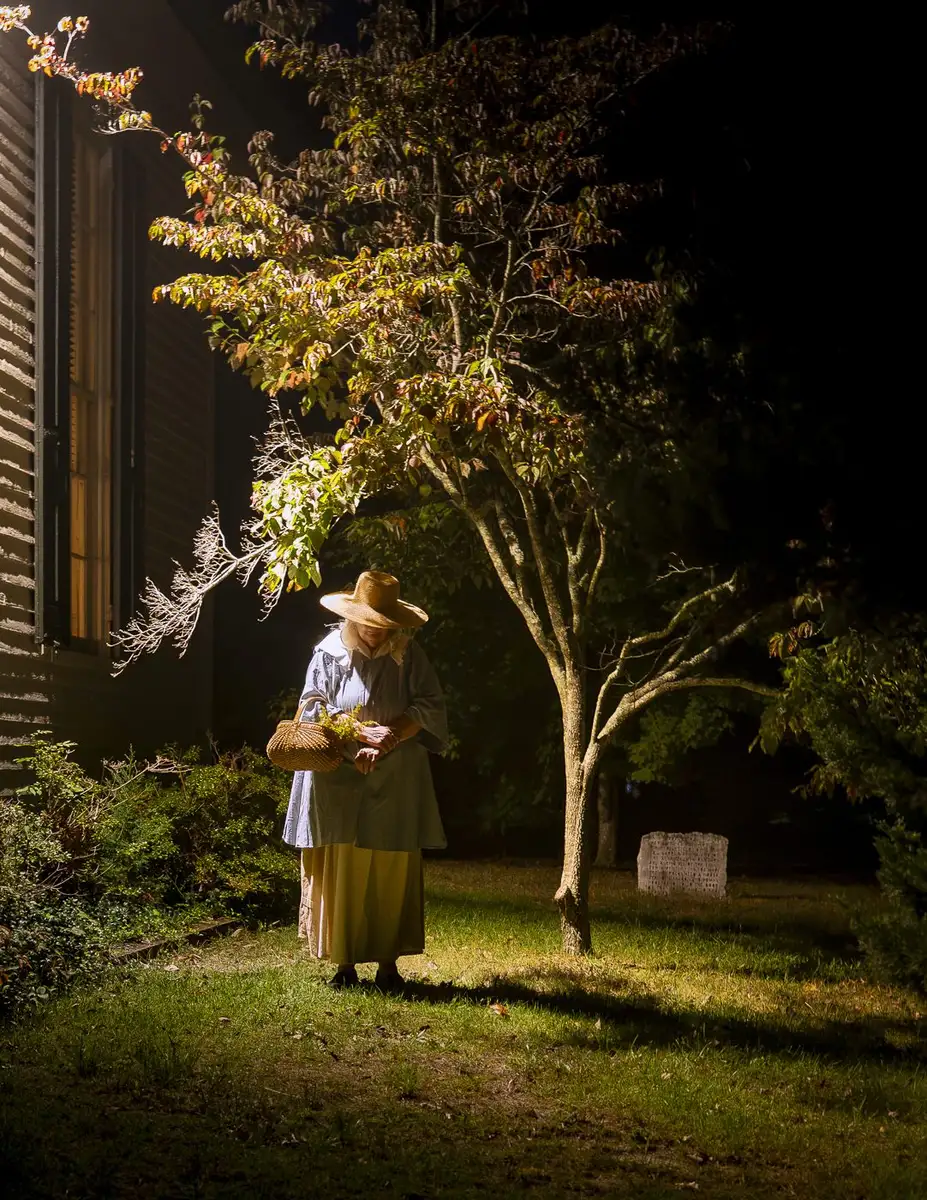
Another spirit lurked in the shadows near the meeting house: Ann Ridgeway Gaunt, who was born one of 11 children in 1710. She was “filled with the spirit of truth” and became a highly regarded speaker at the monthly meetings, even traveling to other Quaker meetings outside of Tuckerton. She married Hananiah Gaunt after they were finally deemed a suitable couple after some initial skepticism due to his “humorous” nature. Gaunt helped heal “ailing” people in the community, using medicinal herbs and other methods when there was no physician. She passed away in 1794 at 84 years old.
Flashing forward some years, the ghost of Jane Bartlett, born in 1857, told of her significant accomplishments. While she was a student at Cornell University, she helped found the American Association of University Women, an organization that still exists today. Later, at the University of Pennsylvania, she was “invited to join a group of civic-minded individuals who were frustrated that social research was little-used to inform public policy. The Academy of Political and Social Science set out to advance research in the sphere,” the spirit said. It also welcomed the work of men of color and women, a rarity for their time.
In 1893, she married J. Henry Bartlett, who aimed to modernize Quaker schools and teach girls as well as boys. In 1901, they purchased Henry’s uncle’s home in Tuckerton. “Henry was fascinated with the local history, and published numerous articles in the local paper about Tuckerton’s heritage.”
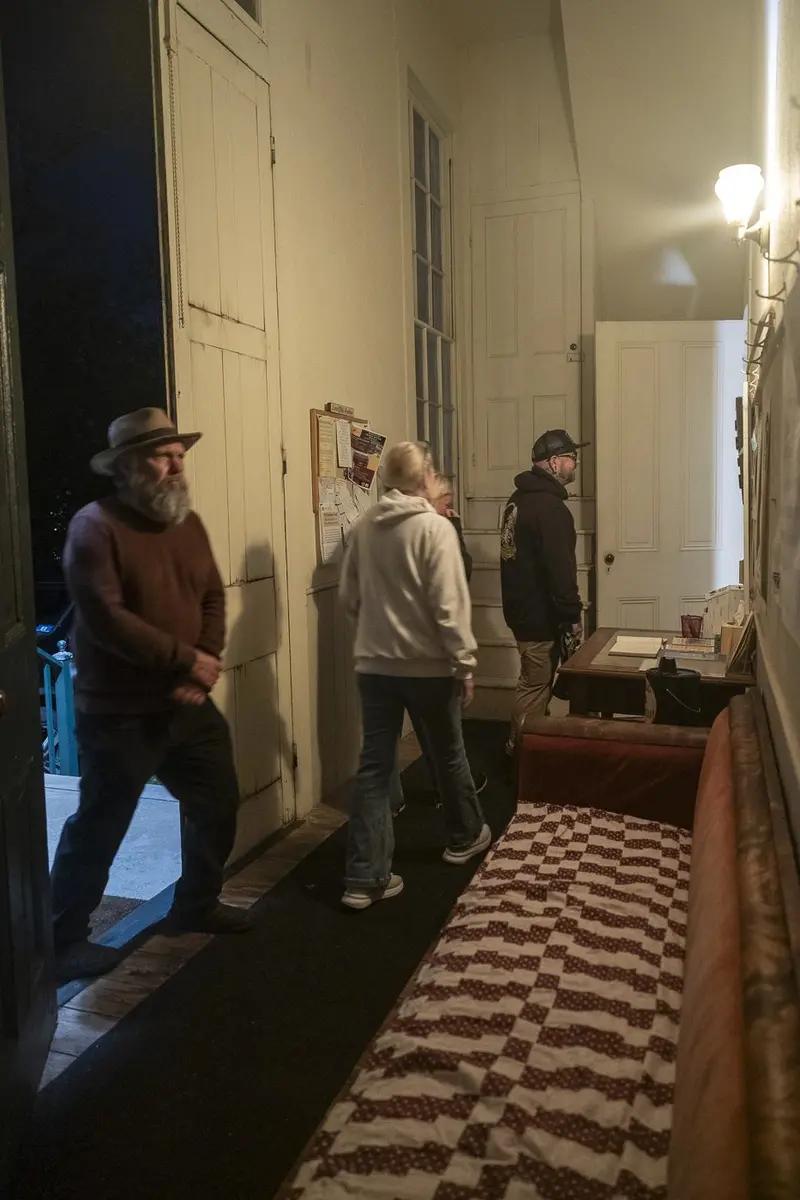
Inside the Quaker meeting house, attendees absorbed more history than haunts; the original building was built in 1709, and as the area grew, the current building was built in 1863 to hold more people. There is no pulpit; instead, benches face each other, welcoming all to speak and be involved, a testament to the Quaker faith.
The tour proceeded back into the darkness toward the Old Methodist Cemetery, where more apparitions waited for the chance to keep their own stories alive in the memories of modern Tuckertonians.
Standing in the shadow of his towering obelisk was the ghost of Ebenezer Tucker, the town’s influential namesake, who held many positions: postmaster, collector of the port, lawyer and congressman, to name a few. Tucker was born in 1757. During the war, he sailed a sloop, targeting British ships sailing up and down the coast. After the war, “with the money I had acquired from being a privateer,” Tucker purchased a substantial amount of land – “In fact, I actually owned half the town,” he said. He went on to build a sawmill, become postmaster, and be appointed collector of the port in Little Egg Harbor. Then he opened a law office in Tuckerton; then, he went on to serve two terms in congress. The rumor goes that Tuckerton threw a party for the people of the town to persuade them to change the name from Clamtown to Tuckerton – but Tucker asserts that he was never one to drink.
“I lived to the great old year of ’88. And I just made it into history, and here I am,” he said.
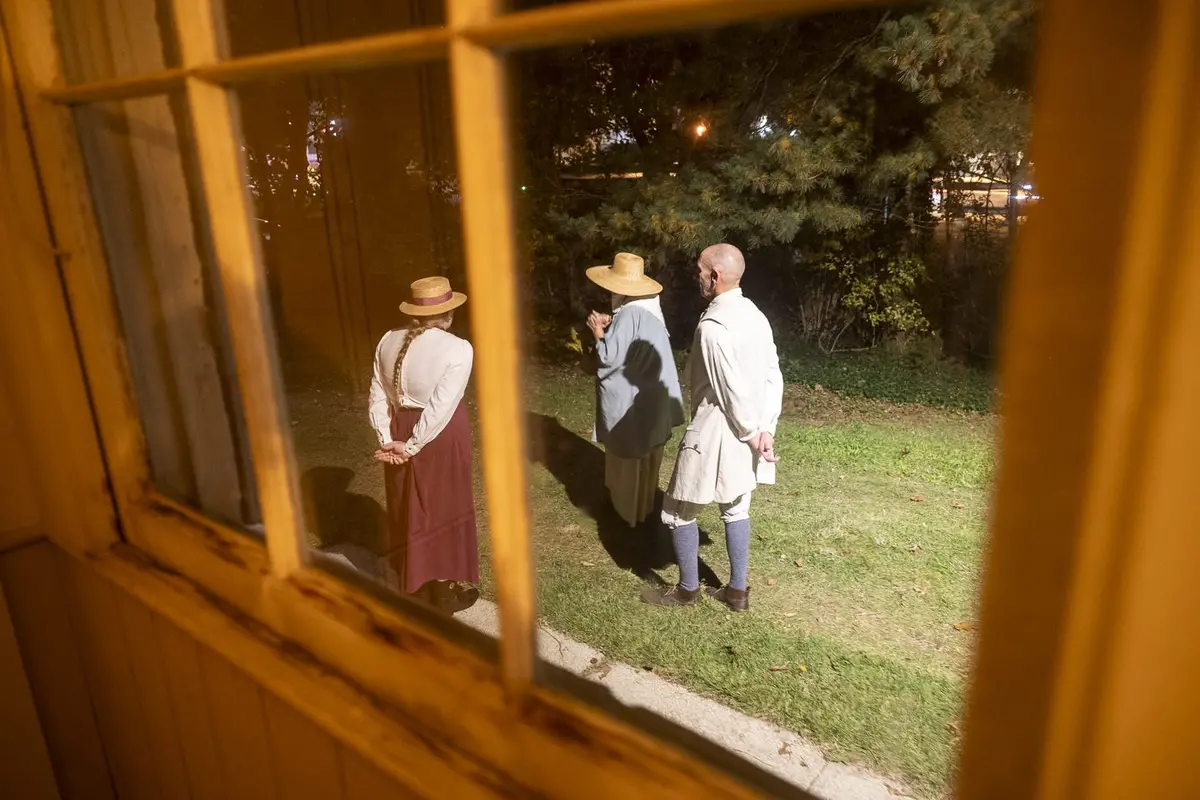
Historical figures linger outside the Quaker meeting house.
Phoebe Smith Mathis’ ghost hovered near her gravestone. She was born in 1764; her father was a captain who sailed out of Chestnut Neck with other captains, including Tucker. “I was still a young child when Captain Clinton sent over 300 British soldiers and 100 loyalists, and they torched our homes, torched our ships and destroyed our villages. Most of us hovered in a tavern with the owner, Daniel Mathis,” she said.
She later married Mathis’ nephew, also named Daniel, and they had nine children. She died in 1836 at the age of 72. “I lived a glorious life. I was also an heiress,” she said. Her family was very influential, and is the namesake of the historic village of Smithville in Galloway Township.
Other spirits informed visitors of what their lives were like in the 18th century, some ridden with illness or grief and others defying their circumstances to accomplish great things. Those who encountered the ghosts walked away from the cemetery not quite “haunted,” but certainly with a renewed perspective of what life was once like in their hometown, and an appreciation for those who came before them.