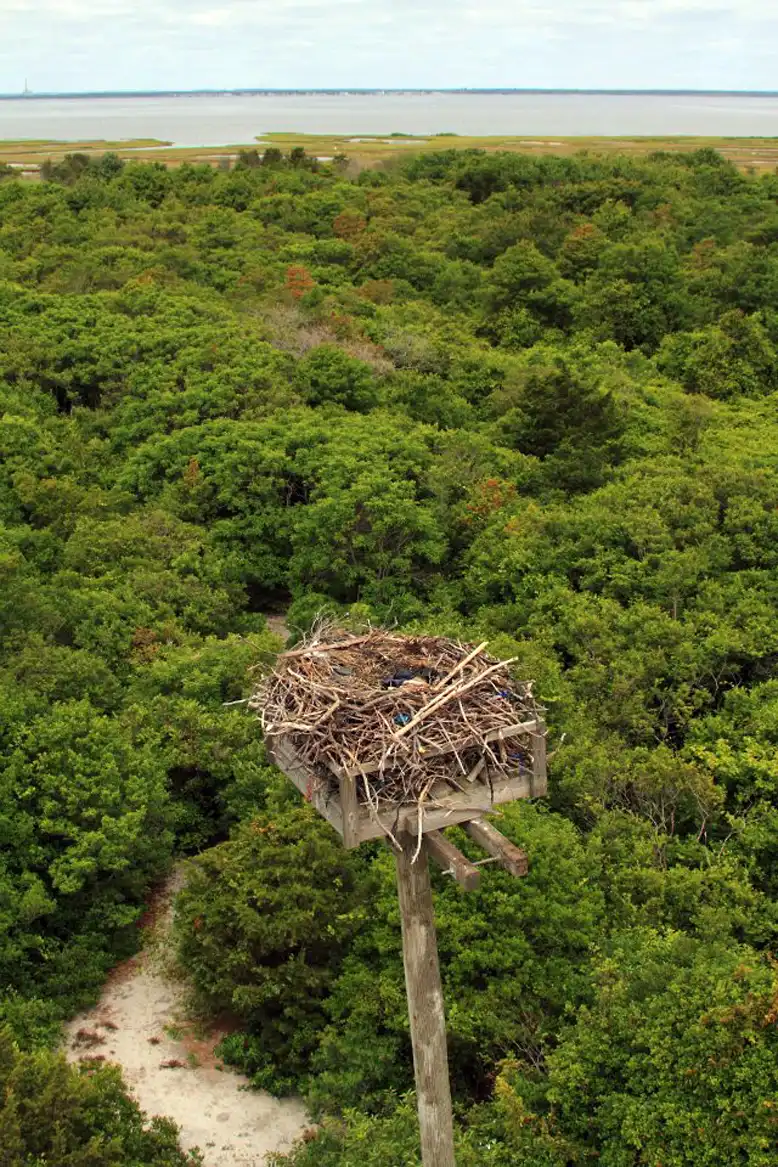
As biologists and volunteer “banders” commence annual ground surveys of ospreys throughout coastal New Jersey, there is optimism that the health and numbers of this once-beleaguered species will continue their upsurge.
Prior to the introduction of the organochlorine insecticide dichlorodiphenyltrichloroethane (DDT) in the 1950s, the state’s osprey numbers were estimated at more than 500 pairs. But by the early 1970s – with DDT in the food chain causing reproduction failure and a loss of habitat along shorelines – the number of pairs had dropped to 50.
New Jerseylisted the osprey as endangered in 1974. Recovery began with the country’s ban on DDT around that same time…
Subscribe to keep reading
This story is from our archive. Get your SandPaper Annual Pass for access to our digital archive, plus everything else a pass includes. Details below.
Annual Pass — $18 Details
365-day access to:
- The complete SandPaper digital archive (stories date back to 2012).
- Full photo galleries from our photographers.
- The entire catalog of SandPaper games, puzzles and quizzes.
How it works
- Enter your email below and click to pay the one-time $18. Card details are entered on Stripe’s secure page.
- You’re in straight away — no password to create, and nothing to set up or manage.
- You stay signed in. If you’re ever signed out, or you read on a new phone or computer, we’ll email you a code to get you back in.
- Never auto-renews. Your pass is good for one year. We will email you when it expires so you can renew if you’d like.
See our site policies for more information.
Already a subscriber? We’ll email a code to get you back in.