Following months of discussion and tens of thousands of voices – recreational anglers, charter captains, fishing guides, bait and tackle shop owners, wildlife biologists, conservationists – calling for strengthened protections for Atlantic menhaden, the Atlantic States Marine Fisheries Commission voted recently to reduce the coastwide total allowable catch (TAC) of menhaden by just 9% in 2027 and another 9% in 2028.
Additionally, the board tied a Chesapeake Bay reduction cap to 21.8% of the coastwide TAC. “That cap is still set higher than the reduction fleet has been catching in the bay,” said American Saltwater Fishing Guides president Tony Friedrich.
According to Ryan Lockwood of the Theodore Roosevelt Conservation Partnership, “The decisions did not align with what nearly 50,000 commenting members of the public had asked for – namely, to slash the Atlantic quota by a full 39% to follow the ASMFC’s own ecosystem-based management targets and to cut the bay cap by half, as a form of precautionary management in the face of struggling coastal osprey and striped bass populations, which rely heavily on menhaden as a primary prey, and significantly reduced landings of menhaden by the bay’s bait fishery.”
“While we are encouraged by the Chesapeake Bay cap reductions in particular, this was unfortunately another year of the ASMFC failing to manage menhaden according to its own ecosystem-based science,” said Jaclyn Lunaas, forage fish program manager for the conservation partnership.
Menhaden, a small, silvery, oily forage fish also known as bunker, is harvested for industrial reduction into products such as fertilizer, animal feed, fish meal and fish oil supplements. Industry representatives had warned that major reductions to catch limits would result in negative economic consequences for its employees.
Omega Protein, a Virginia-based subsidiary of Canadian seafood giant Cooke, and Ocean Harvesters, in Reedville, Va., with which Omega contracts to catch and process menhaden, thanked the ASMFC commissioners and staff “for their work on menhaden management while condemning attacks by recreational fishing and environmental groups following the vote,” the companies said in a statement.
As Omega and Ocean Harvesters also stated, they “believe a reduction from the existing coastwide quota was unnecessary, but recognize that commissioners faced difficult decisions and worked hard to reach a compromise.”
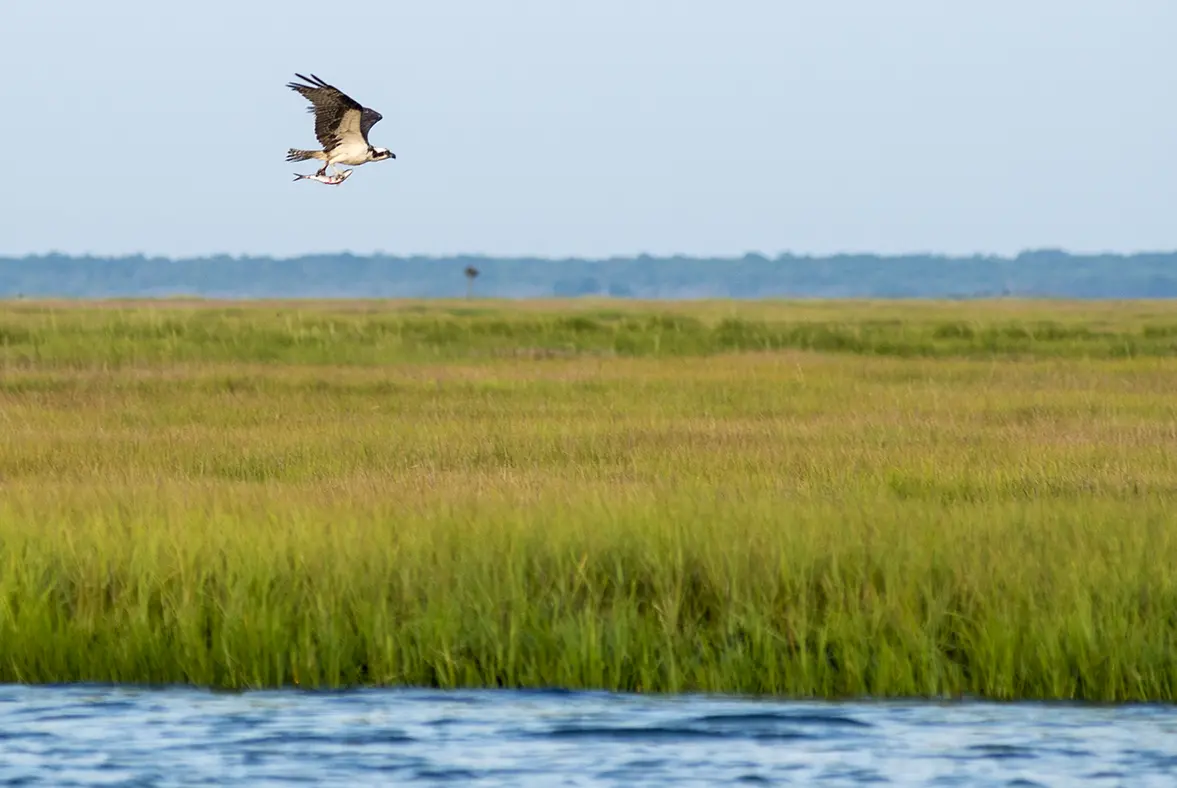
Those recreational fishing and environmental groups, meanwhile, are concerned about the impact on the ecosystem when bunker are sparse. Menhaden is a vital food source for predatory fish such as striped bass, bluefish, tuna and sharks; marine mammals, including whales and dolphins; and seabirds like ospreys, which just experienced their worst nesting season on record in the Chesapeake Bay and along the Jersey Shore due to what wildlife biologists say is a scarcity of their primary prey.
The fish is also utilized as bait for commercial and recreational fisheries. On and near Long Beach Island, the dearth of this small schooling fish has affected anglers.
Greg Cudnik, owner of Fisherman’s Headquarters in Ship Bottom, said of the recent vote, “It’s a major disappointment and failure of ASMFC by not taking decisive action to help protect menhaden, which are a vital link in the food web.”
Conserve Wildlife Foundation of New Jersey senior wildlife biologist Ben Wurst, who leads the organization’s Osprey Project, said the decisions were, sadly, not unexpected. As far as the part New Jersey plays in the ASMFC – a partnership of coastal states – “the track history is we vote anti-conservation.”
“We are going to see food stress continue for ospreys,” Wurst remarked. “We will see nest failures,” as the lack of menhaden leads to abandoned incubation or starvation of young. “Ospreys are obviously not valued as a critical bioindicator species, when they should be.”
“While the agreement to reduce the industrial menhaden harvest in the bay … can be seen as a step in the right direction, the decision doesn’t meet the urgency of the moment,” said American Bird Conservancy President Michael J. Parr.
“We have reviewed the new quotas set by the ASMFC and consider them to be inadequate,” Parr added. “Recent annual landings of menhaden have been below the new quotas, so these reductions won’t immediately reduce the harvest. Meanwhile, every summer, we’re seeing osprey chicks starving up and down the Atlantic Coast due to a lack of menhaden – one of the only fish that provides for their nutritional needs.
“This is a crisis for ospreys, but our concern goes far beyond one species. Everything is connected, and a crisis for one species signals a problem across the ecosystem.”
As Wurst pointed out, the AMSFC charter “says they need to manage fisheries for the ecosystem.” The main page of the commission’s website explains, “As a partnership of coastal states, we work together to protect essential marine species, ensuring vibrant fisheries, thriving communities and resilient ecosystems, all through science-driven, cooperative management.”
And yet, as Friedrich notes, “The board chose the menhaden industry over the rest of the coast. … It also refused to act on its own data: a National Oceanic and Atmospheric Administration staff error, off by a magnitude of 14 standard deviations, allowed roughly 450 million extra pounds of menhaden to be harvested over the past three years. NOAA found the error, corrected it; and then voted against acting on it.
“A Massachusetts motion that would have cut the TAC by nearly 28% over two years failed 8-10,” he added. “NOAA Fisheries and U.S. Fish and Wildlife Service voted against it; with their support, it would have passed.”
Mike Waine, Atlantic fisheries policy director for the American Sportfishing Association, remarked, “Again, the commission chose not to follow their own science. The flexibility offered within the menhaden fishery management plan allows too much discretion when setting menhaden quota levels consistent with ecosystem targets.”
An American Saltwater Guides Association article posted online – “50,000 Voices Ignored: Menhaden Disappointment” – explained the AMFSC’s decisions and also noted what comes next. The AMFSC postponed discussion of reallocating state quotas to its winter meeting in January. In May 2027, the new caps take effect.
And, in 2028, “The next assessment update will inform TACs beyond 2028. New research funded by a $2.5 million congressional appropriation and the Virginia General Assembly, covering tagging, hydroacoustic surveys and socioeconomics, is expected to reach the board around the same time,” the article notes. “Every comment period is a chance to be counted again. When the next one opens, we’ll break it down and tell you exactly how to weigh in.”
In response to the article, Steven Schnebly wrote, “Halibut, cod, herring, weakfish, flounder, bluefish, bass, etc., etc. Now, bunker. NOAA has ensured not only that bluefish and bass numbers will never recover, but also has condemned sharks, whales, tuna and just about every species on the Atlantic coast to the same end. All for some Canadian company based in Chesapeake and lobstermen in Maine. When does it stop? The corruption is nauseating. When will the focus on short-term money cease during debates about the future of our fishery, our oceans and our planet? Thus, us. Damn the greed.”
“I attended the meetings,” said Fred DeFinis. “The technical presentations are very impressive and the discussions are highbrow, but when it comes to voting, the meeting degenerated into a total grab-fest with everyone looking out for their own (perceived) interests and not the coastwide fishery. It was one of the most repulsive spectacles I have witnessed in my 75 years. New Jersey made a pact with the devil by voting with the reduction fishery even though those boats are now operating off the southern New Jersey coast.”
Meanwhile, Jeffrey Miller penned, “It seems incredible that these boards vote down the will of the many in favor of the few.”
“The board elected to establish the lowest coastwide quota in the history of the fishery, which is seemingly a positive outlook for conservation, but this decision will not meaningfully reduce actual harvest by the industrial reduction sector,” stated Lunaas, of the Roosevelt Conservation Partnership. As she explained, the menhaden reduction industry’s fleet, which is essentially allotted nearly three-quarters of the total allowed Atlantic menhaden harvest, has in recent years been unable to land roughly a quarter of its allocated annual quota.
“On the water,” she continued, “this quota reduction will only impact the catch available to the bait sector, limiting access to a critical resource for commercial bait harvesters, recreational fisheries and the coastal businesses they support, not to mention the striped bass, ospreys, whales and other predators that depend on menhaden.”