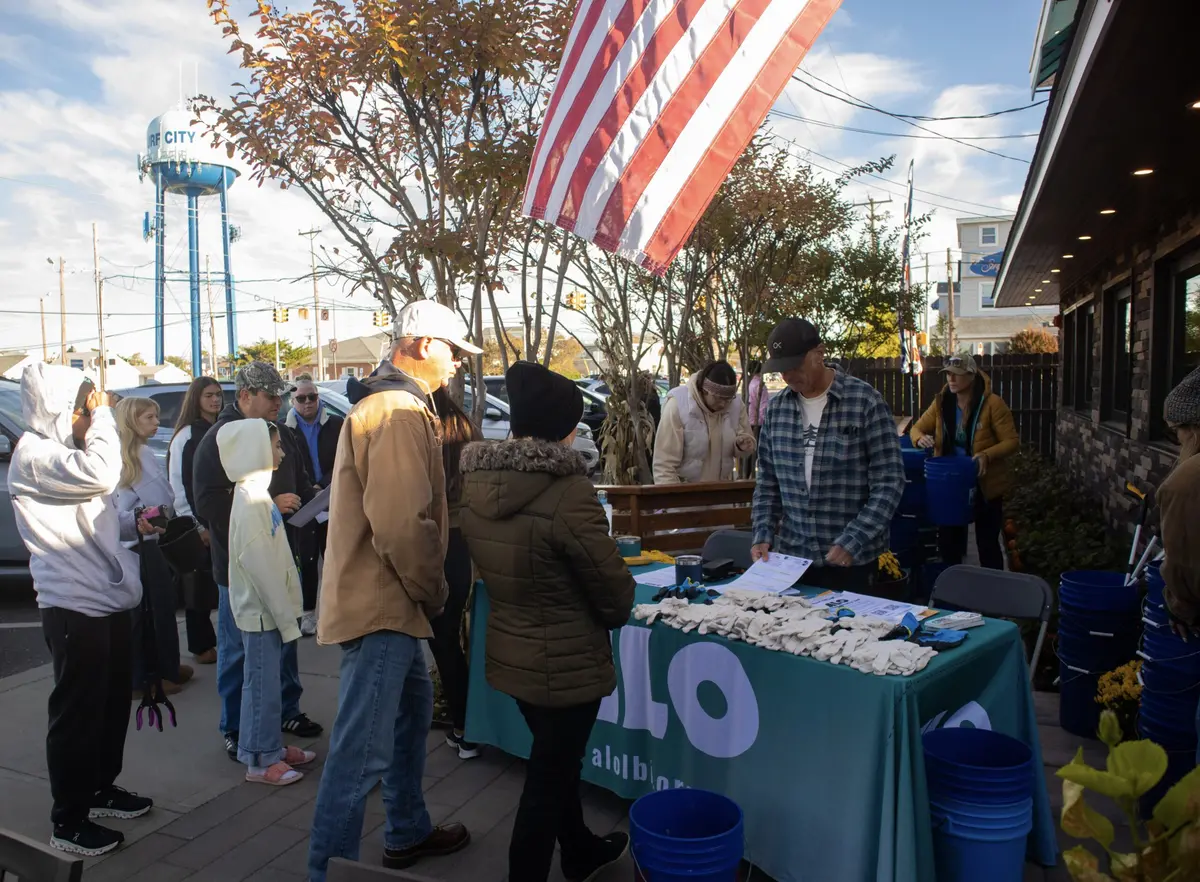
Nearly 50 volunteers headed to the shorelines of Long Beach Island late last month as part of Clean Ocean Action’s Fall Beach Sweeps, facilitated locally by Alliance for a Living Ocean. The nonprofit set up outside Wally’s Restaurant, in Surf City, to check in all those participating locally in this 41st installment of the statewide beach cleanup.
ALO board member Dustinne Lau said a total of approximately 110 pounds of trash was collected from the Island’s ocean and bay beaches during the Sweeps, held Oct. 24.
As the organization stated, “A little time and teamwork go a long way toward protecting our beaches, wildlife and coastal environment.”
Throughout New Jersey, more then 4,500 people removed litter from 80 different sites.
“With volunteers from scout troops, local businesses, civic groups and beyond, Beach Sweeps saw communities across the Jersey Shore remove debris – from discarded bottle caps to heavy automobile parts – from N.J. beaches to protect the coast, communities and marine life,” said Evan Leong, communications and marketing director for Clean Ocean Action.
Meg Sulzberg, COA’s plastic-free sea coordinator, remarked, “Thousands of hands made immediate, visible progress in preserving New Jersey’s coastal ecosystems. The dedication of our volunteers during this year’s Fall Beach Sweeps restores our beaches today and informs the data we need to stop marine pollution at the source tomorrow.”
Information gathered during Beach Sweeps drives policy change at the local and state levels, according to the ocean advocacy organization, which is based in Long Branch. Each e-cigarette, dental floss pick or plastic utensil recorded by volunteers becomes part of a growing body of evidence that reveals how pollution reaches and impacts the coast.
This community science effort asks volunteers to document every item collected on data cards categorizing more than 100 types of litter. That data – from both the fall and spring Sweeps held each year – is then used to garner support for new environmental policies, ordinances and laws, such as 2022’s “Get Past Plastic Law,” which, among other requirements, successfully banned plastic bags in stores across the state.
“To solve problems, we first have to measure them,” Leong noted. “When thousands of volunteers document what they find on our beaches, we build the evidence that’s necessary to push for change at the state level. Community science connects hands-on cleanup efforts with lasting pollution prevention efforts across the state.”
Each fall and spring, COA releases a “Roster of the Ridiculous” following Beach Sweeps to highlight the most unusual items found by volunteers during the event. On the roster for the recent cleanup: a creepy plastic doll, a toy clown head, a stingray carcass, an ankle monitor, a railroad tie, fake flowers, a puppy shoe, part of a refrigerator, a snorkel tube, a headlamp, a toolbox and a variety of discarded household items. “These unexpected discoveries underscore the wide range of debris that can end up on New Jersey’s beaches and in our waterways,” said Leong.
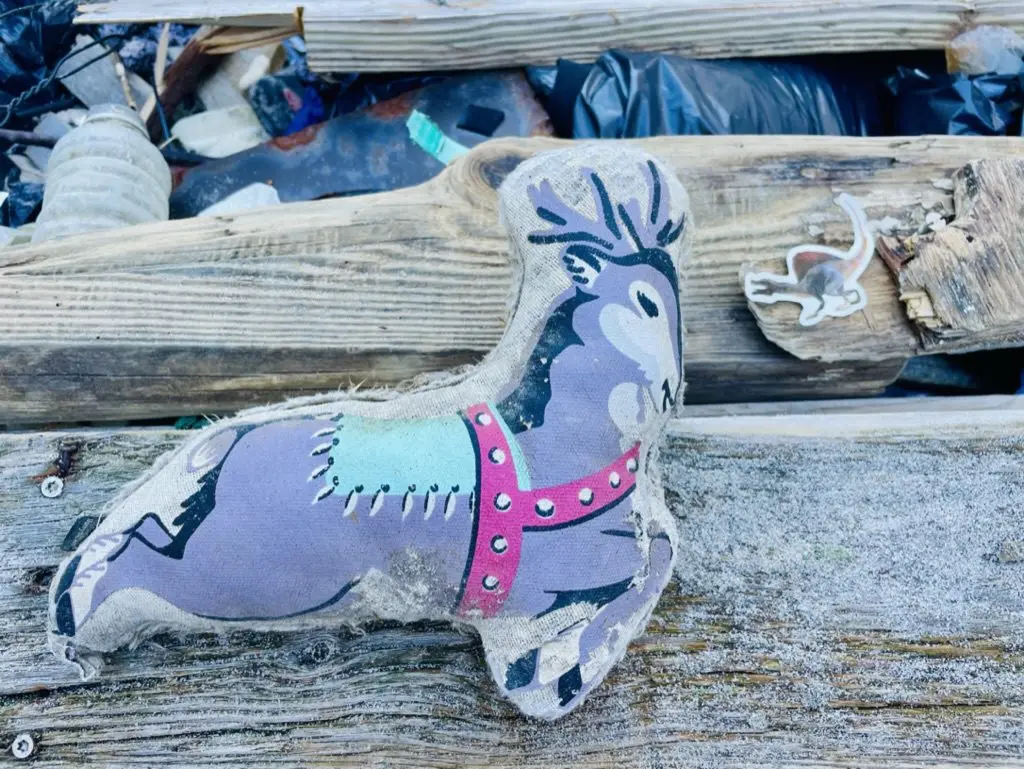
LOST AND FOUND: One of the day’s discoveries — somewhere, a dog is missing its reindeer toy.
On LBI, one interesting find was a reindeer dog toy that a furry friend somewhere is surely sad to have lost.
Teachers and students from the Marine Academy of Technology and Environmental Science in Manahawkin also took part in Beach Sweeps, as they have for more than three decades. This time, MATES supported the event in Seaside Heights.
“The cleanup is not only a way for students to volunteer, but it is a way for the students to become better stewards of our environment,” said John Wnek, supervisor of science and research at MATES. “The students collect important data about debris and plastics found on our beaches, which helps to support future actions to lessen these items on the beach. Students also become part of the solution by reducing their use of unnecessary items like straws that could potentially end up in the environment. We’ve been a part of this program for 32 years and look forward to cleaner beaches and making a difference.”
Cindy Zipf, executive director at COA, remarked, “Beach Sweeps clearly shows the power of the people. This is statewide community science in action: every volunteer, every site and every item collected paints a clearer picture of the challenges facing our waterways and the work needed to protect them. COA is grateful to everyone who made this statewide effort possible.”